Download
1 / 13
130 likes | 259 Vues
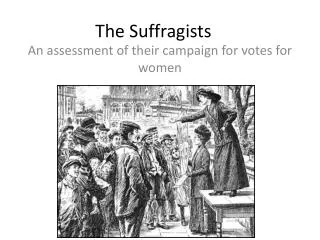
The 19th Amendment to the U.S. Constitution granted women the right to vote in 1920, a monumental achievement for the suffragist movement. Leading figures like Carrie Chapman Catt and Alice Paul played pivotal roles in rallying women and garnering media attention for their cause. However, they faced fierce opposition from anti-suffragists, including wealthy women and clergymen who feared societal change. This exploration highlights key images and voices from the movement, the reasons for women's suffrage, and the potential political and social impacts of the amendment.

E N D
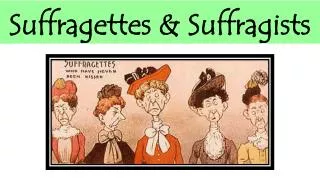
Suffragists and their Struggle “The right of citizens of the United States to vote shall not be denied…by the United States or by any State on account of sex” What amendment gives women the right to vote in 1920? --19th Amendment to the U.S. Constitution
Women’s Right to Vote Image analysis Summary (notebook) • For each image, describe the meaning or intent. (What do you think the image tells us about suffragist movement? • Create a main idea sentence. • Support the main idea sentence with IMPORTANT DETAILS!!
Leaders of Protest • The National American Women’s Suffrage Association (NAWSA) led by Carrie Chapman Cattheavily recruited socially prominent and politically influential women • 1912 Alice Paul from Britain began to organize protests in the U.S. and national attention from the press
Anti-suffragists • Much opposition came from women • National Association Opposed to Woman Suffrage (NAOWS) in 1911made up wealthy and influential women, Catholic clergymen, and Southern congressman • Feared the destruction of society due to altering gender roles • Women would no longer take care of children and household
Double-edged sword • Talk with a partner about the following: • What would be the political impact of the 19th Amendment? • What social consequences did opposition to the 19thAmendment fear?
Alice Blackwell, “Why Women Should Vote”, 1906 • Read the excerpt of the 16 reasons women should vote. • Complete the GO by filling in the details with different reasons of significance. • In Main Idea Sentence, answer the following, “Which are the three most persuasive reasons to allow women to vote, in your opinion?”