Download
1 / 12
120 likes | 249 Vues
Chronic Obstructive Pulmonary Disease (COPD) encompasses various lung disorders characterized by airflow obstruction, leading to difficulties in breathing. The primary causes include tobacco use and exposure to pollutants. Dental professionals play a crucial role in motivating COPD patients to quit smoking and manage their condition. With an estimated 9.9 million Americans affected by chronic bronchitis and 4.9 million by emphysema, awareness of treatment options, including medication and lifestyle changes, is essential. Collaborative care can improve overall health, including oral health.

E N D
Pulmonary Disease Presented by: Bobbie Jo Bennett, Kristen Franklin, & Lacey McGallion
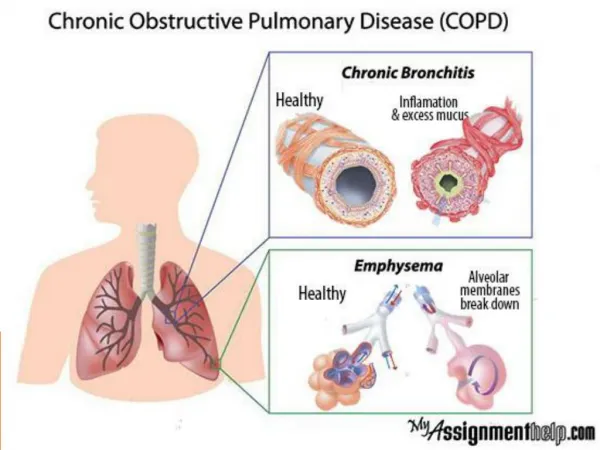
Chronic obstructive pulmonary disease (COPD) A large group of lung diseases characterized by obstruction of air flow that interferes with normal breathing. 2 common types Chronic bronchitis Emphysema
Etiology • The primary etiology is use of tobacco and exposure to occupational and environmental pollutants. • Dental hygienists should motivate patients with COPD using tobacco to begin a smoking cessation program.
Occurrence • Chronic bronchitis • 2009- estimated 9.9 million Americans • Emphysema • 2009- estimated 4.9 million Americans • Population at increased risk • Chronic bronchitis • Race: non-hispanic white • Age: 45-64 years old • Sex: women almost 2x likely • Location: South of the United States • Emphysema • Race: non-hispanic white • Age: 65+ years old • Sex: men • Location: South of the United States
Treatment • No cure • Medication intervention • Home oxygen therapy • Pulmonary rehabilitation • Surgery (lung transplant & LVRS)–severe cases only • Patients are encouraged to… • Stop smoking • Adequate nutrition • Drink plenty of water • Exercise regularly • Decrease exposure to pollutants
Medications • Pneumonia and influenza vaccines • Bronchodilators and other medications similar to those used for asthma • Beta-agonists • Anticholinergics • Systemic or inhaled corticosteroids • Antibiotics
Dental Concerns Indications Contraindications • Low-flow oxygen helpful • Epinephrine • Nitrous oxide/oxygen for stress management • Narcotic analgesics • Diazepam/Lorazepam • Rubber dam
Will medical treatment impact oral health? How? • Will medications impact oral health? How?
Expected/Accepted Treatment Options • Pre-med • No- controversial • Patient positioning • Semi-supine or upright chair position to facilitate breathing • Appointment length • Shorter appointments • Ultrasonic use • Avoid use- Pathogens may be aspirated into the lungs • Recall intervals • Semi-annual appointments- unless other medical/dental issues involved
References • Wilkins textbook • Online… • http://www.lung.org/finding-cures/our-research/trend-reports/copd-trend-report.pdf • http://www.clevelandclinicmeded.com/medicalpubs/diseasemanagement/pulmonary/chronic-obstructive-pulmonary-disease/ • http://www.fidanoski.ca/dentalhygiene/2011/COPD.htm