Download
1 / 7
70 likes | 194 Vues
This report outlines the progress in sequencing chromosome 6 of tomato, highlighting the selection of minimal overlapping BAC (Bacterial Artificial Chromosome) clones using BAC-end sequences. As of September 2005, twenty-one finished BACs were reported, with fourteen currently in the sequencing pipeline and eleven undergoing fluorescence in situ hybridization (FISH). The sequences of sixteen BACs have been publicly shared via SGN, facilitating further research. Key methodologies include AFLP fingerprinting, physical mapping, and BAC-end screening, contributing to an enhanced understanding of tomato genetics.

E N D
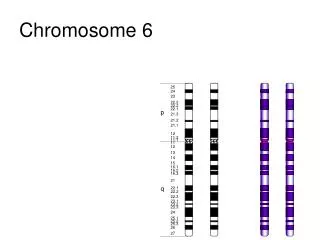
Progress in sequencing chromosome 6 - State of the art - Selection of minimal overlapping BAC clones from tomato chr.6 using BAC-end sequences • René Klein Lankhorst • Plant Research International • Wageningen, NL Sept 2005
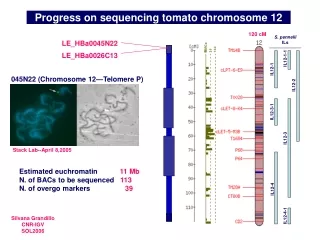
CBSG Tomato Sequencing ProgramState of the Art for chromosome 6: • Total number of finished BACs: 21 (19 in Phase 1/2 and 2 in Phase 3) • Number of BACs in current sequencing pipeline: 14 • Number of BACs in current FISH pipeline:11 • Sequences of 16 BACs have been uploaded to SGN for public release
+0/+0 AFLP fingerprint BAC binning High-Resolution local physical map Seed BAC BlastN BAC-ends Sequence alignment of selected BAC-ends Pre-selected BACs Largest extending, minimal overlapping BAC Selection of BACs by BAC-end screening
AFLP AFLP AFLP AFLP AFLP AFLP AFLP AFLP Finished seed BAC Blast homology search and sequence alignment of BAC ends +0/+0 fingerprinting, binning and physical mapping Selection for minimal overlap and largest extension Sequencing, assembly, walking Selection of BACs by BAC-end screening
Mi-2 hsp’s Hyp. protein transposon Candidate BAC Selection of BACs (I) BlastN analysis of finished seed BAC P250I21
Selection of BACs (III) P073H07 assembled BAC end on P250I21
Selection of BACs (IV) Assembly of BAC ends on P250I21