Essential Eye Protection: Comparing Polycarbonate and Glass Solutions
Protecting your eyes from physical and chemical hazards is crucial in various environments. Polycarbonate lenses offer superior impact resistance while being lightweight and offering built-in UV protection. They can be coated for scratch resistance, with various coating and tinting options available. Glass lenses, while high-density and scratch-prone, lack the same impact resistance. Understanding when to use safety glasses, goggles, or face shields is key, especially in situations involving physical impacts or chemical splashes, such as sulfuric acid exposure. Choose wisely for optimal protection!

Essential Eye Protection: Comparing Polycarbonate and Glass Solutions
E N D
Presentation Transcript
PHYSICAL AND CHEMICAL PROTECTION Polycarbonate Strongest material for impact resistance Lightweight Can be coated for scratch resistance Most have built-in UV radiation protection Plastic (CR39) About one-half the weight of glass Resistant to solvents and pitting More choices for coatings and tinting Glass High-density material (heavy lenses) Loses impact resistance if scratched Does not meet impact criteria as set by CSA
EXAMPLE OF CHEMICALS IN EYES Sulphuric acid splash
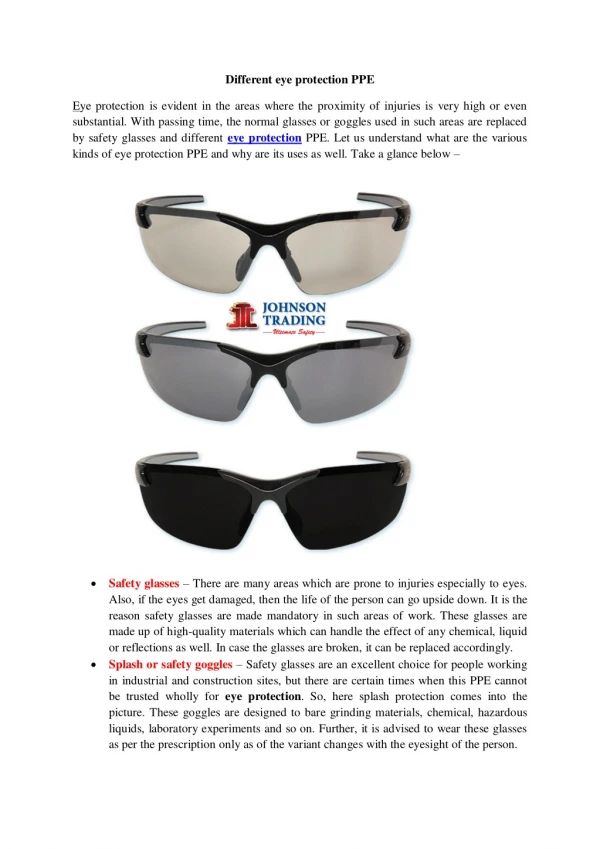
EYE PROTECTIONSAFETY GLASSES Visitor glasses versus Safety Glasses
EYE PROTECTIONGOGGLES • Splash and multi-directional particulate protection • Depending on the use, may be required to be worn under a face shield