Download
1 / 10
100 likes | 229 Vues
In this lecture, we explore the multifaceted nature of lying within negotiation contexts. We examine what constitutes a lie, the intent behind it, and the nuances of ethical considerations when faced with dishonesty. Key topics include the techniques of lie detection, common emotional cues during deception, and the practical implications of recognizing lies in negotiations. We also discuss how to manage situations where you suspect a partner is lying, without directly confronting them, while maintaining your negotiation strategy. Join us for a thorough understanding of ethics in negotiation.

E N D
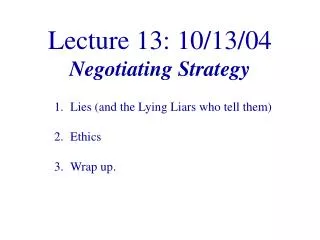
Lecture 13: 10/13/04Negotiating Strategy • Lies (and the Lying Liars who tell them) • Ethics • Wrap up.
What Makes a Lie? • Intent important: The will to conceal or mislead crucial • Notification • Key that it is not an understood deception • We often give implicit consent • Concealment • Produces many of the same clues.
What is not a Lie? • Secrecy- notification • Broken promise- if no intent to break • Failure to remember (an honest one) • Self-deceit • Cancer patient example • NASA Challenger example • Natural liar/natural performer
Techniques of Lying • Telling a false statement • Telling the truth falsely • Telling half truth • Incorrect inference dodge
Why Lies Fail • Inadequate Preparation - Consistency • Liars who don’t plan their line or are unprepared to answer questions are likely to be exposed • Can become overrehersed • Skillful liars don’t overcorrect • Emotions • Hard to express unfelt emotions / conceal true feelings
Common Emotions of Lying • Fear of being caught • See this in Lie-detector protocols • Be careful of Othello's error • Guilt • Duping Delight • The pleasure and excitement of “putting one over”
Leakage: Clues & Signs • Hard to suppress strong emotions: Emblems • Shows on face, posture, shoulders & hands • Often covered up by actions • Facial expressions • Masking smiles: in the eyes • Leaking in eyes and lip. • Vocal Clues • Increase in pitch often accompanies lies / strong emotions • Pause speech or slips: when trying to not say something • Gestures- “Illustrators” • Liars use fewer (less natural) hand or non-verbal gestures
Ethics: A Few Considerations • Is there a difference between lies which are: • Immaterial, Informative of value? • Verifiable? • Situations in which tough calls have to be made: • Divest others of wrong beliefs? • Omit vs. Commit? • Take advantage of other’s Un-sophistication? • What about Power?
Now What? • What if a negotiating partner lies? • Often best not to call them a liar. • Should you let them know you know they are lying? • Can be used as influence through consistency • What if negotiations break down? • Was there a Zopa? • Can you use this to learn?
Thank You! I’ve thoroughly enjoyed teaching this, and wish you all well with the rest of the semester.