Download
1 / 16
160 likes | 274 Vues
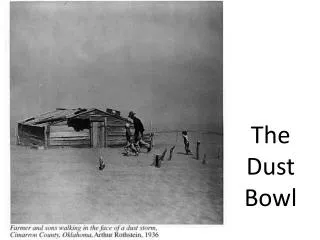
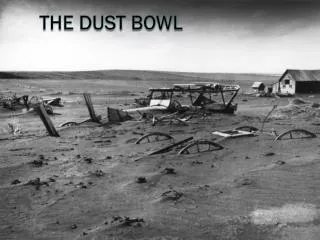
The Dust Bowl, which ravaged the Great Plains in the 1930s, was driven by over-cultivation, drought, and severe windstorms. Tractors accelerated farming but led to topsoil erosion, turning fertile land into desert. The decade saw drastic drops in rainfall, resulting in devastating health issues, rampant crime, and debt. April 14, 1935, known as Black Sunday, featured catastrophic dust storms that affected even cities on the East Coast. The resulting migration, known as the Dust Bowl Exodus, marked the largest internal movement in U.S. history, altering the lives of millions.

E N D
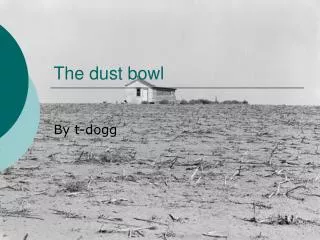
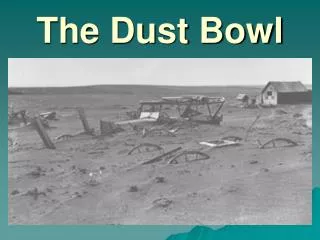
Causes • Over cultivation of the Great Plains • Tractors and Threshers • 1830s58 hrs to plant and harvest one acre with a horse drawn plow • 1930s3 hrs with a tractor • Topsoil 6 feet deep • Drought (1930s), high winds, and over cultivation (grass turned over) cause millions of tons of top soil to be carried into the winds.
Causes (continued) • Drought: • In 1931, rainfall amounts begin to drop and summer temperatures are often above 100° • Drought conditions worsen throughout decade, normal rainfall does not return until 1939
Human toll • People were affected by the following: • Devastation of their cropland • Respiratory health issues • Unsanitary living • Rampant crime • Debt-ridden families
Dust Bowl • Took place in Colorado, Kansas, Oklahoma, New Mexico, and Texas. • Severe droughts and dust storms. • 60% of the population leaves the region.
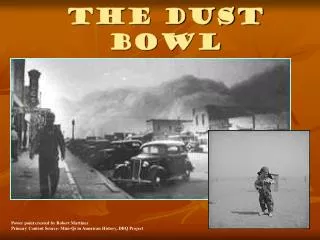
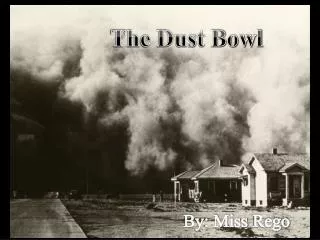
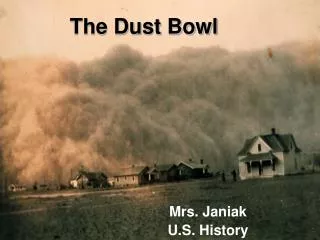
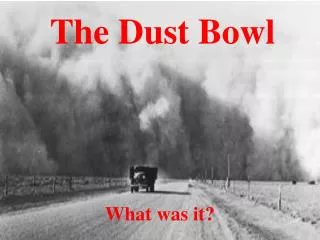
Black Sunday • On April 14, 1935, known as "Black Sunday", • Twenty of the worst "Black Blizzards" occurred throughout the Dust Bowl • Turned day to night. • Witnesses could not see five feet in front of them.
Black Sunday (con.) • At times the clouds blackened the sky reaching all the way to East Coast • Cities such as New York and Washington, D.C. • Much of the soil ended up deposited in the Atlantic Ocean.
Dust Bowl Exodus • The Dust Bowl Exodus was the largest migration in American history within a short period of time. • By 1940, 2.5 million people had moved out of the Plains states; of those, 200,000 moved to California.
Okies • Many farm families were forced to leave due to foreclosure and barren land. • Okies - Migrants left farms in Oklahoma, Arkansas, Missouri, Iowa, Nebraska, Kansas, Texas, Colorado and New Mexico
Legacy • Over 300,000 people left Great Plains - mostly for west coast • Plains continue to be an environmentally sensitive area • Dust Bowl refugees meet with hardship and mistrust in new homes • US Government sees importance of preventing environmental disasters