Analyzing Topsoil Depths and Underlying Soil Composition at 21 Acres: A Winter 2010 Study
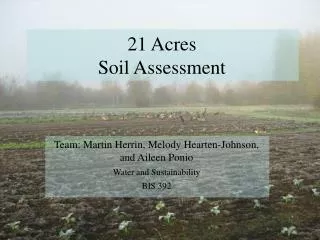
In this study conducted at 21 Acres, we aimed to measure topsoil depths and observe soil texture and color variations in various plots (D, E1, E2, G, H1, H2). Using nine measurements per plot, we found that the topsoil depth was around 15 inches, with the underlying layer primarily composed of clay, low silt, and minimal sand. This information is essential for crop planting planning. Despite the limitations in measurement accuracy, the findings will be cross-referenced with other soil studies for more comprehensive analysis.

Analyzing Topsoil Depths and Underlying Soil Composition at 21 Acres: A Winter 2010 Study
E N D
Presentation Transcript
21 Acres Mapping Group Satori Johnson, Rainer Oviir, Sam Shupe BES 318 Winter 2010 W University of Washington Bothell
Objectives: • To measure topsoil depths for plots D, E1, E2, G, H1, and H2. • Observe differences in soil texture and color in underlying layers.
Methods & Procedures • Nine measurements collected in each plot. • Depth was measured at change of soil characteristics.
What we saw: This photograph was taken from plot D and shows the change in soil composition. The depth of the topsoil at this site was 15 inches. The underlying layer was mostly clay with a low percentage of silt and almost no sand.
The big picture: • Topsoil depth was greater than expected • Information useful for planning crop plantings • Soil composition in layers below topsoil were diverse and changed drastically from one site to the next.
Limitations and Future recommendations: • Limitations: • Research errors – inaccurate measurements • Measurements were taken one week apart • Future work: • Cross-reference findings with data obtained by infiltration rates group, soil hydraulic properties group, and soil nutrients and organic matter group • Conduct more comprehensive soil profile analysis.
Acknowledgements: 21 Acres’ education director, Dave Muehleisen21 Acres staff & VolunteersDr. Robert Turner