SlideServe
Menu
Préférences
© SlideServe · v2026

Bacillus

mira-travis avatar
9 diapositives · 417 Views · Nov 30, 2014

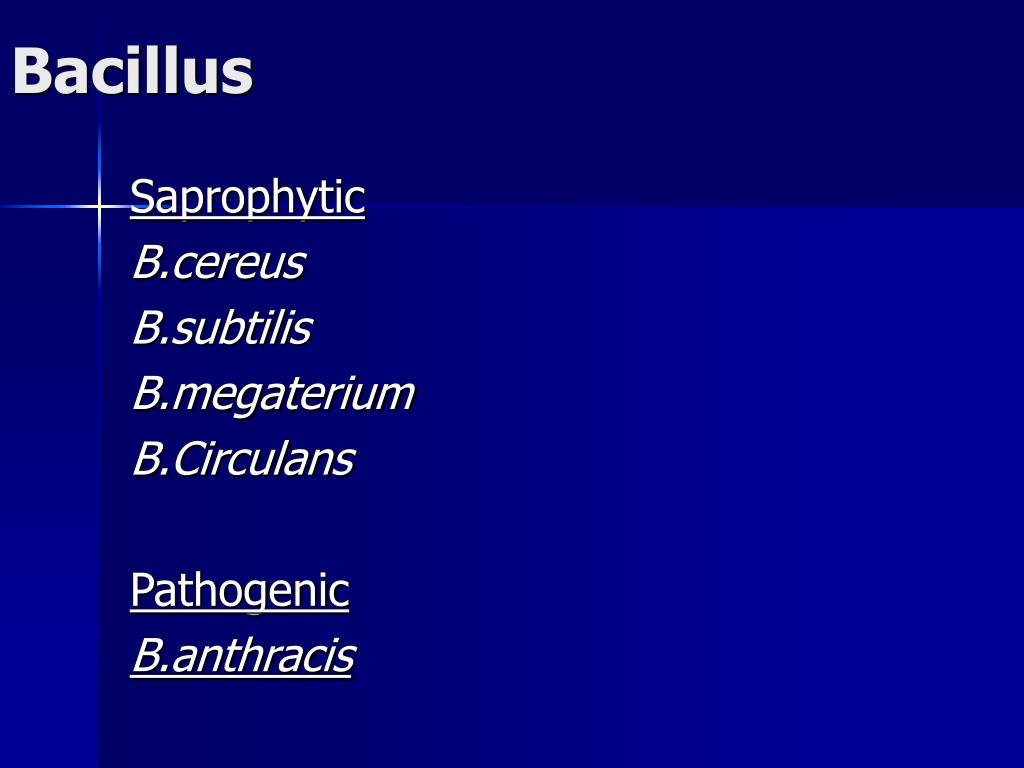
Bacillus. Saprophytic B.cereus B.subtilis B.megaterium B.Circulans Pathogenic B.anthracis. B.anthracis.
Bacillus - slide 1
01 / 9Bacillus
1 / 17

Télécharger la présentation

Bacillus
Une image / un lien ci-dessous est fourni (tel quel) pour télécharger la présentation

Politique de téléchargement : le contenu du site vous est fourni TEL QUEL pour votre information et votre usage personnel ; il ne peut être vendu, concédé sous licence ni partagé sur d’autres sites sans l’accord de son auteur.Le contenu vous est fourni TEL QUEL, pour votre information et votre usage personnel uniquement. Téléchargez la présentation en cliquant sur ce lien. Lors du téléchargement, si vous ne parvenez pas à télécharger une présentation, l’éditeur a peut-être supprimé le fichier de son serveur.Pendant le téléchargement, si vous ne parvenez pas à obtenir une présentation, le fichier a peut-être été supprimé par l’éditeur.

F I N

Plus de contenu associé

Transcription de la présentation
  1. Bacillus Saprophytic B.cereus B.subtilis B.megaterium B.Circulans Pathogenic B.anthracis

  2. B.anthracis • It is aerobic G+ve, large ,square-ended (rectangular)bacilli with oval central spores, non motile, capsulated, arranged singly or in short chains, the organism grows well on blood agar. Hemolysis is uncommon with B.anthracis but common with saprophytic bacilli. If the colonies are looked under microscopic lens. They will appear as apiece of curled hair. The colony is composed of continuous chain of bacilli. The colony is described as "Medusa- head", this character is useful for DX & identification of the colony. By G.stain, some spores will be seen in between the vegetative cells and these spores appear as empty spaces with out stain. The spores usually resist boiling & some chemicals & dry heat of 140Cْ but they are destroyed by autoclaving (moist heat) for 15 min.

  3. Biochemical reaction • Glucose , sucorose & maltose are fermented with production of acid only. The bacilli are catalase+ve and reduce nitrates to nitrites.

  4. Antigens • C.W Ag • Capsular Ag. • Somatic Ag

  5. Types of anthrax • There are three clinical types of anthrax based on the route of infection • 1-Skin or coetaneous anthrax (Malignant pustule) • 2- Respiratory or pulmonary anthrax (wool sorters' disease) • 3- Intestinal anthrax (rare) in primitive or poor society. Eat meat of infected • animals

  6. Pathogenesis • Anthrax is a zoonosis. The portal of entry is the respiratory tract, a cut in skin or the mouth when spores enter the human body, they lodge in one place & starts to germinate they will produce toxins & enzymes till hemorrhage & oedema are produced . • In susceptible persons, the bacilli resist Φ & spread to lymphatic to the blood where they multiply freely in blood & tissues. While in resistant people, there is more leukocyte response with Φ and decapsulation of the microorganisms. • Once the organism looses its capsule, it will die easily because it looses its virulence.

  7. Clinical findings • Skin anthrax: a papule first develops within 12-36 hrs after entry of the organisms or spores through a scratch. This papule rapidly changes into a vesicle, then a pustule, and finally a necrotic ulcer from which the infection may disseminate. Giving rise to septicemia. • Respiratory anthrax:: In inhalation anthrax , early manifestations may be mediastinitis, sepsis, meningitis, or hemorrhagic pulmonary edema. Hemorrhagic pneumonia with shock is a terminal event. • Intestinal anthrax:: Ingestion of spores cause severe enteritis accompanied by bloody diarrhea with high fatality. • Hence, all types of anthrax, if not treated in time, progress to septicemia and death occurs from overwhelming infection.

  8. Lab DX • Specimens: Pus, Blood, swabs, fluid, sputum • Smear • Culture: • 1-Medusa head • 2-fir tree appearance • 3-curled hair • Animal inoculation • Serodiagnosis

  9. Treatment • B.anthracis • Pencillin, ciprofloxacin, erythromycin, tetracycline • Other Bacillus spp: • Vancomycin, ciprofloxacin