Understanding Cultural Resources: Definitions, Types, and Importance
Cultural resources are key aspects of the human environment that encompass historic, aesthetic, and cultural elements. This term, used by the Federal Government, refers to any historic or archaeological property identified during planning, which aligns with the regulations of the Advisory Council on Historic Preservation (ACHP). Cultural resources include tangible and intangible traces of past human activities, from artifacts and structures to folk practices and documentation. These resources help preserve the historical and cultural narrative of communities and are vital for compliance with laws like the NHPA and ARPA.

Understanding Cultural Resources: Definitions, Types, and Importance
E N D
Presentation Transcript
Cultural Resource The term is used throughout the Federal Government to refer to historic, aesthetic, and cultural aspects of the human environment . In NRCS, the term is sometimes used interchangeably to refer to any historic or archaeological property that has been identified during planning or to refer to “historic properties” as defined by the ACHP regulations. In fact, the term “cultural resources” is not identical to the term “historic properties” and may incorporate natural and broader cultural elements (i.e., spiritual) of the human environment. NRCS 401 CRM Manual
190 - National Cultural Resources Handbook Part 601 – Definition Cultural Resources, in NRCS, are considered equivalent to "historic properties" as defined by the ACHP regulations for compliance with Section 106 of the NHPA. They include any prehistoric or historic district, site, building, structure or object listed in or eligible for listing in the National Register of Historic Places (maintained by the Secretary of the Interior). They also include all records, artifacts and physical remainsassociated with the historic properties. They may consist of the traces of all of the past activities and accomplishments of people. Cultural resources that are also protected under other authorities (such as the American Indian Religious Freedom Act) include (1) tangible traces such as districts, sites, buildings, structures and objects; (2)less tangible traces such as dance forms, aspects of folklife, landscapes, vistas, cultural or religious practices; (3) historical documents; (4) and some landscapes, vistas, cemeteries (if they have historic or cultural value) and lifeways.
This same term may also refer to: (1) resources that have little or no historic values but do have contemporary cultural value; (2) resources included in or determined eligible for inclusion in the National Register of Historic Places or an equivalent register maintained at the state or local level; (3) unevaluated resources that may be eligible for inclusion in the National Register or an equivalent; (4) properties that may qualify for the protections afforded by the Archeological Resources Protection Act or the Native American Graves Protection and Repatriation Act.
Bottom line: Cultural Resources are: Anything intentionally modified by human activity or that holds cultural importance AND is at least 50 years old.
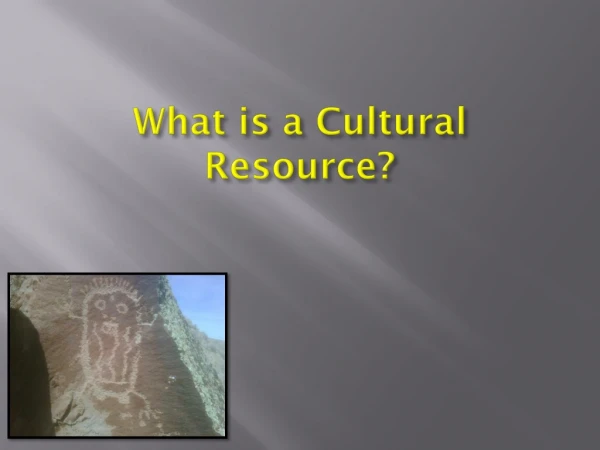
What is a CR 2 Any observable or tangible remains of historic peoples. Artifacts Structures Trails/Routes Landscapes
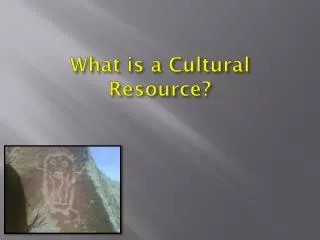
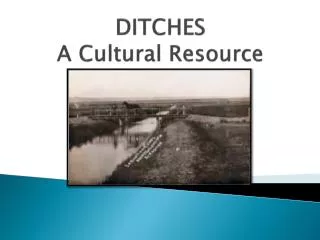
Broad Categories Prehistoric: Points, Flakes, Scrapers, Drills, Hammer Stones, Grooved Mauls, Cores, Shaft Abraders, Hearths, Stone Circles, Rock Art Historic: Cans, Bottles, Nails, Horseshoes, Toys, Gun Parts, Clay Pipes, Wagon Parts, Homesteads, Structures, Irrigation Ditches, Trails/ Roads
Common Artifact Types Metal Glass Lithics/flakes/debatage Worked Stone Tools Ceramics Fire Cracked Rock (FCR)
Rocks vs. Stone Artifacts River Rocks (cobles) Hammer Stones/ Manos