SlideServe
Menu
Préférences
© SlideServe · v2026

The functions of the cell organelles

misty avatar
14 diapositives · 384 Views · Jul 20, 2014

The functions of the cell organelles. Cytoplasm. Jelly-like fluid that fills the cell. Described by Felix Dujardin. Cytoskeleton Provides internal support Supports organelles and maintains the shape of the cell Made up of microtubules and microfilaments. Nucleus.
The functions of the cell organelles - slide 1
01 / 14The functions of the cell organelles
1 / 17

Télécharger la présentation

The functions of the cell organelles
Une image / un lien ci-dessous est fourni (tel quel) pour télécharger la présentation

Politique de téléchargement : le contenu du site vous est fourni TEL QUEL pour votre information et votre usage personnel ; il ne peut être vendu, concédé sous licence ni partagé sur d’autres sites sans l’accord de son auteur.Le contenu vous est fourni TEL QUEL, pour votre information et votre usage personnel uniquement. Téléchargez la présentation en cliquant sur ce lien. Lors du téléchargement, si vous ne parvenez pas à télécharger une présentation, l’éditeur a peut-être supprimé le fichier de son serveur.Pendant le téléchargement, si vous ne parvenez pas à obtenir une présentation, le fichier a peut-être été supprimé par l’éditeur.

F I N

Plus de contenu associé

Transcription de la présentation
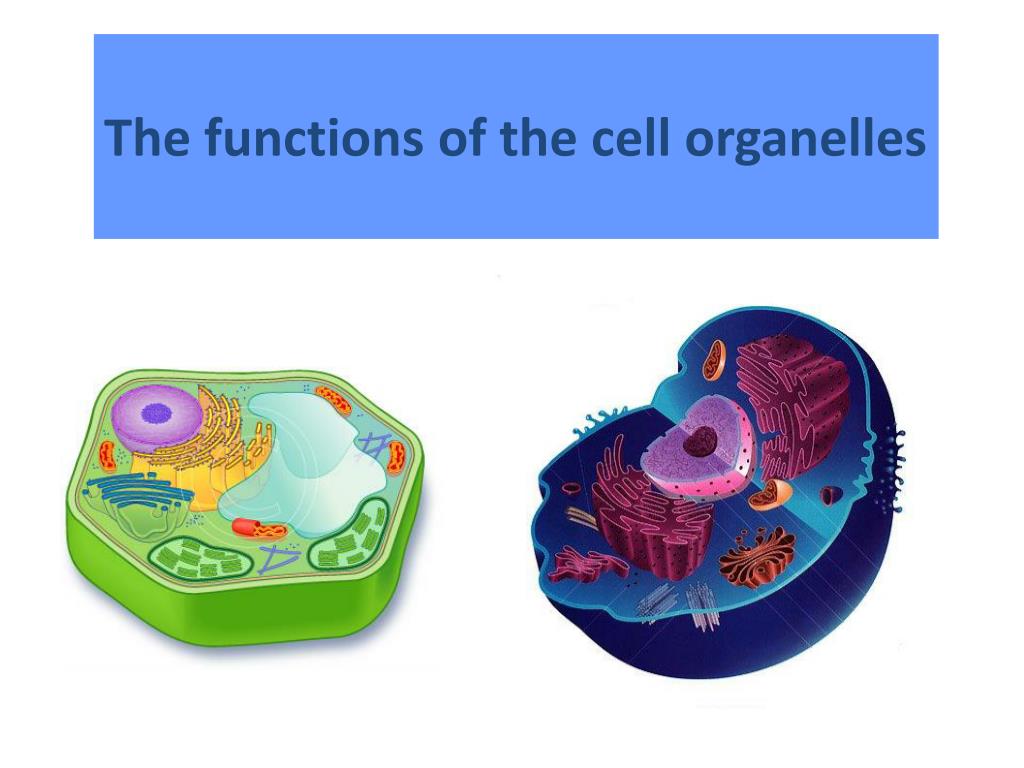
  1. The functions of the cell organelles

  2. Cytoplasm • Jelly-like fluid that fills the cell. • Described by Felix Dujardin

  3. Cytoskeleton Provides internal support Supports organelles and maintains the shape of the cell Made up of microtubules and microfilaments

  4. Nucleus • Controls activities of cells, cell reproduction & heredity Chromosomes/Chromatin Nuclear Membrane Genetic information Controls transport of materials into and out of the nucleus Nucleolus Synthesis and storage of RNA PORES

  5. Ribosomes: Site of protein synthesis • Composed of 2 subunits. • Prokaryotes = 70s ribosomes • Eukaryotes = 80s ribosomes 2 parts of ribosome Ribosomes are located - on the endoplasmic reticulum - on the surface of the nuclear envelope - free floating in the cytoplasm.

  6. Endoplasmic Reticulum“Internal Transport System” • Transports substances throughout the cell • Rough ER is site of protein synthesis • Smooth ER is the site of lipid and steroid synthesis and detoxifies substances.

  7. Golgi Apparatus “The Packaging Plant” • Temporarily stores, packages, and transports materials • Packages digestive enzymes to make lysosomes. • Lysosomes digest food particles and foreign substances.

  8. The Endomembrane System Nucleus Smooth Endoplasmic reticulum Rough Endoplasmic reticulum Golgi apparatus Vacuoles/ vesicles Plasma Membrane Lysosomes

  9. Mitochondria “Powerhouse” of the cell Site of cellular respiration

  10. Vacuoles/Vesicles Reservoirs for water and dissolved substances. Stores food or waste. Plant cell vacuole Contractual vacuole for single celled animals

  11. In PLANTS Only Cell Wall • Providesexternal support andprotection • Preventsbacterialinvasion • Made up of cellulose

  12. In PLANTS Only Plastids Chloroplast: Contains chlorophyll which captures light energy for photosynthesis Chromoplast:stores accessory pigments for photosynthesis Amyloplast/Leucoplast: stores excess glucose from photosynthesis as amylose/starch

  13. In ANIMALS Only • Centrioles • Found in the cytoplasm • Produce spindle fibers that are used to • separate chromosomes during cell division.