
Confucianism and Legalism: Philosophical Foundations of Ancient China
Confucianism, founded by Confucius (551-478 BCE), emphasizes harmony, balance, and ethical relationships, as outlined in the Analects. Its core principle, the Golden Rule, "Do not do unto others what you would not want others to do unto you," guides personal conduct, focusing on the Five Relationships: ruler and ruled, parent and child, husband and wife, old and young, and friend and friend. In contrast, Legalism arose during the Qin Dynasty, advocating strict laws and harsh punishments, rooted in the belief that humans are inherently evil, necessitating strong governmental control.
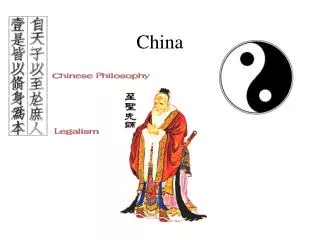

Confucianism and Legalism: Philosophical Foundations of Ancient China
E N D
Presentation Transcript
Confucius 551-478 BCE 522 BCE begins to teach Zhou Dynasty 1100-256 BCE Mencius 372-289 BCE Golden Rule “Do not do unto others what you would not want others to do to you” Harmony and Balance Government chaotic under this philosophy Analects Philosophical system Five Relationships Ruler and ruled Parent and child Husband and wife Old and young Friend and friend Confucianism
Laozi Harmony in nature Shunned politics Rejected formal social structures Renounce worldly ambitions Yin and Yang Helped Chinese accept Buddhist ideas brought by monks and traders from India Daoism500’s BCE
Law is the supreme authority Strengthen state at all costs Rejected Confucian idea of learning Strict laws Harsh punishments Qin Dynasty—200’s BCE Beliefs Humans by nature evil Need for strong government Legalism