Impact of MannaPack™ Potato on Childhood Diarrhea in South Africa: Clinical Trial Findings
330 likes | 357 Vues
Explore how MannaPack™ Potato, a new product, is evaluated to reduce the impact of childhood diarrhea in South Africa. The study assesses its effectiveness, acceptability, and nutritional benefits, providing crucial insights for healthcare stakeholders.


Impact of MannaPack™ Potato on Childhood Diarrhea in South Africa: Clinical Trial Findings
E N D
Presentation Transcript
MannaPack™ Potato Clinical Trial Wilna Oldewage-Theron PhD RD (SA) & Abdulkadir Egal PhD (PH)
OUTLINE OF PRESENTATION • Introduction • Background • Stakeholders • Methods • Results • Limitations • Conclusions • Recommendations
BACKGROUND: South Africa • 49.32 million (SSA 2009) • 40% live in poverty • (Cunnan & Maharaj, 2000:669, SA Govt, 2001) • 2.5% hungry (1.23 million people household food insecurity) (SSA 2009) • 20% of SA children stunted • 33.3% iron deficiency anaemia in children and women • 45.3% children at risk of zinc deficiency • 10% of children overweight (Labadarios et al., 2008) • 16.6% HIV and AIDS prevalence (WHO Stats, 2008)
INTRODUCTION • Diarrhea = one of the top killers of • children around the world • Solution = medication or oral rehydration fluids
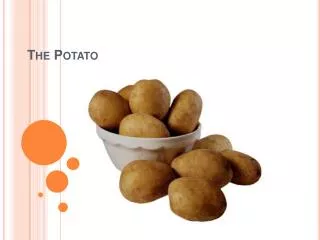
INTRODUCTION • FMSC - new product, MannaPack™ Potato (MPP) to provide a “first food” in response to diarrhea • Dehydrated potato granules (resistant starches) • Lecithinated soy flour (protein source) • Gum arabic (soluble fiber) • Vitamins and minerals • Mild sweet potato flavoring • Reduce the impact of diarrhea and maintain • the gut during diarrhea and recovery.
MAIN AIM Overall purpose of the project was to document the actual impact and acceptability of MannaPack™ to reduce the impact and support resolution of the symptom of chronic and acute diarrhea.
SPECIFIC OBJECTIVES • Assess the acceptability of • MannaPack™ in a setting that provides care and treatment for children with diarrhea. • Assess the impact of MannaPack™ on • the quality and quantity of acute and chronic diarrhea in a community setting.
PROJECT METHODS • 1. Planning • Ethics approval (M080365) • Strategic participatory planning workshop with all stakeholders in South Africa (SA) • Two crèches in the Vaal region identified (control group) • SOS village for HIV/AIDS-affected orphans in Qwa-Qwa (experimental group). • Consent • Training of data enumerators and monitors
PROJECT METHODS • 2. Measurements • Diarrhea questionnaire - baseline + 6 weekly • Sensory questionnaire – baseline and end
PROJECT METHODS • 2. Measurements • Weight and height, handgrip, skin tenting • & nail blanching – baseline + 6 weeks
PROJECT METHODS 3. Intervention
QWA-QWA BACKGROUND • 5 people per household (hh) • 89.9% of caregivers unemployed • 67.4% of partners unemployed • 59.1% of hh < R 1000 (US$133) pm • 51.0% hh food insecurity
VAAL REGION BACKGROUND • 4.9 people per hh • 94.1% of caregivers unemployed • 80.1% of partners unemployed • 58.3% of hh < US$133 pm • 53.0% hh food insecurity
LIMITATIONS • Questionnaires not tested for SA but for Zimbabwe only although in the same region • Diarrhea not a public health problem in • SA – small sample size • 2010 World Cup
Beneficiary profile who completed the study • Children between the ages 2 to 13 years of age • Experimental group consisted of 29 girls and 32 boys with overall mean age of 6.2 years • Control group was 27 girls and 22 boys with overall mean age of 3.5 years • 2010 World Cup
Variable Experimental group (n=63) Control group (n=49) Baseline Follow-up Significance of change between baseline and follow-up (p) Baseline Follow-up Significance of change between baseline and follow-up (p) Age 6.2±3.6 6.4±3.5 3.4±1.2 3.4±1.1 Weight (kg) 21.9±8.8 22.2±9.1 0.002 15.07±2.54 15.06±2.56 0.444 Height (m) 1.14±0.21 1.15±0.21 0.047 1.04±0.27 1.05±0.27 0.083 Skin tenting (seconds) 1.0±0.0 1.0±0.0 0.145 3.0±0.6 3.2±0.6 0.133 Nail blanching (seconds) 3.9±0.9 3.6±0.7 0.004 3.1±0.6 3.1±0.6 1.000 Handgrip right hand 7.5±4.2 7.4±4.1 0.400 - - Handgrip left hand 7.0±4.4 7.1±4.2 0.681 - - RESULTS
Classification Girls n= (%) Boys n= (%) Total group n=61 (%) Baseline Severely stunted 3.4 6.3 4.9 ≥-3<-2 SD Stunted 10.3 6.3 8.2 Girls n=25 (%) Boys n=21 (%) Total group n=46 (%) At the end of the intervention (Follow-up) <-3 SD Severely stunted 3.4 6.3 4.9 ≥-3<-2 SD Stunted 10.3 6.3 8.2 RESULTS: STUNTING (EXPERIMENTAL)
Classification Girls n=27 (%) Boys n=22 (%) Total group n=49 (%) Baseline <-3 SD Severely stunted 0 5.9 2.3 ≥-3<-2 SD Stunted 11.5 17.6 14.0 Girls n=25 (%) Boys n=21 (%) Total group n=46 (%) At the end of the intervention (Follow-up) <-3 SD Severely stunted 0 5.9 2.3 ≥-3<-2 SD Stunted 11.5 17.6 14.0 RESULTS: STUNTING (CONTROL)
Classification Girls n=25 (%) Boys n=23 (%) Total group n=48 (%) Baseline <-3 SD Severely underweight 0 4.5 2.1 ≥-3<-2 SD Underweight 11.5 4.5 8.3 Girls n=25 (%) Boys n=21 (%) Total group n=46 (%) At the end of the intervention (Follow-up) <-3 SD Severely underweight 0 0 0 ≥-3<-2 SD Underweight 7.7 0 4.2 RESULTS: UNDERWEIGHT (EXPERIMENTAL)
Classification Girls n=25 (%) Boys n=23 (%) Total group n=48 (%) Baseline <-3 SD Severely underweight 3.7 0 2.0 ≥-3<-2 SD Underweight 3.7 4.5 4.1 Girls n=25 (%) Boys n=21 (%) Total group n=46 (%) At the end of the intervention (Follow-up) <-3 SD Severely underweight 3.7 0 2.0 ≥-3<-2 SD Underweight 3.7 4.5 4.1 RESULTS: UNDERWEIGHT (CONTROL)
CONCLUSIONS • MannaPackT consumption results indicated a minority consuming the product for the whole week. • A significant improvement was observed for underweight after the intervention. • Impact of the MannaPackTMon the nutritional status of the experimental group very clear. • This was not observed in the control group.
CONCLUSIONS • Incidence and severity of diarrhea significantly reduced in the experimental group as the study progressed. • Control group remained largely • unchanged. • MannaPackTM contributed to the • reduced incidence and prevalence of diarrhea in the experimental group.
ACCEPTABILITY RESULTS • Mashed potatoes not commonly consumed by the low-income groups in South Africa. • MannaPackTM not very acceptable at baseline. • Liked the MannaPackTM towards the end of the study.
RECOMMENDATIONS • MannaPackTM can be effectively used as a relief food in emergency situations where both diarrhea and/or acute food shortage exist. • Can complement the already successful commodities like CSB and WSB in the USAID title II programmes.
wilna@vut.ac.za abdul@vut.ac.za