Understanding Pain: A Comic Book for Children about Moira's Grandad's Experience
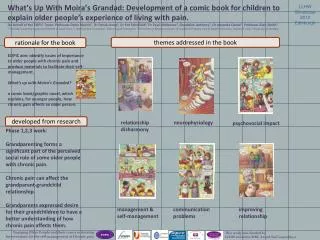
"What’s Up With Moira’s Grandad?" is a unique comic book designed for children to help them understand the experience of older adults living with chronic pain. Developed by the EOPIC team, this graphic novel tackles the psychosocial aspects of pain and its impact on relationships, particularly between grandparents and grandchildren. It aims to foster empathy and communication, empowering younger generations to support their loved ones. This project is rooted in research focused on improving the quality of life and relationships for older individuals managing chronic pain.

Understanding Pain: A Comic Book for Children about Moira's Grandad's Experience
E N D
Presentation Transcript
What’s Up With Moira’s Grandad: Development of a comic book for children to explain older people’s experience of living with pain. On behalf of the EOPIC Team: Professor Denis Martin1, Dr Derek Jones2, Dr Pat Schofield3, Dr Paul McNamee4, Geraldine Anthony4, Dr Amanda Clarke2, Professor Blair Smith5 1 Teesside University Institute of Health & Social Care, 2, Northumbria University 3 Universityof Greenwich, 4 University of Aberdeen Centre of Academic Primary Care & Health Economics Research Unit, 5University of Dundee. LLHW Showcase 2012 Edinburgh themes addressed in the book rationale for the book • EOPIC aim: identify issues of importance to older people with chronic pain and • produce materials to facilitate their self-management. • What’s up with Moira’s Grandad? • a comic book/graphic novel, which explains, for younger people, how chronic pain affects an older person. relationship disharmony neurophysiology psychosocial impact developed from research • Phase 1,2,3 work: • Grandparenting forms a significant part of the perceived social role of some older people with chronic pain. • Chronic pain can affect the grandparent-grandchild relationship. • Grandparents expressed desire for their grandchildren to have a better understanding of how chronic pain affects them. management & self-management communication problems improving relationship Engaging Older People and their carers to develop Interventions for the self-management of Chronic pain This study was funded by LLHW initiativeMRC Award Ref G0900684/2 EOPIC