Download
1 / 15
160 likes | 292 Vues
This comprehensive overview delves into the fascinating world of irony, covering its three main types: situational, verbal, and dramatic. Situational irony occurs when there’s a discrepancy between expected outcomes and reality, such as a policeman wishing you a nice day after a car accident. Dramatic irony arises when the audience knows something that characters do not, illustrated by the tragic end of Romeo and Juliet. Lastly, verbal irony highlights the contrast between what is said and what is meant, often with a sarcastic tone. Examples and discussions included.

E N D
The teacher made an F on her report. The firehouse burned down!
There are three types of IRONY • Situational • Verbal • Dramatic
I MUST NOT WRITE ALL OVER THE WALLS Situational irony happens when there is a difference between what happens and what you think should happen
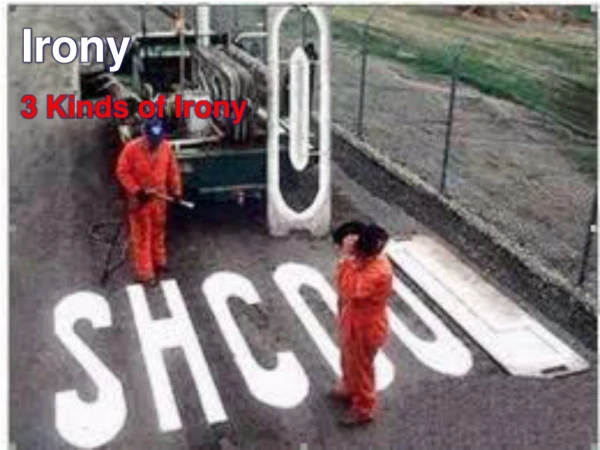
Other examples of SITUATIONAL irony A policeman says, “Have a nice day!” when you just had a car wreck.
Dramatic Irony Whena character is unaware of something that we, the audience or reader, know.
When Romeo finds Juliet in a drugged sleep, he assumes her to be dead and kills himself. Upon awakening to find her dead lover beside her, Juliet then kills herself.
Verbal Irony • A contrast between what is said or written and what is actually meant – is often sarcastic.
Verbal Irony: What Lisa might say to Bart after he gets in trouble
“Ironic” by Alanis Morisette Listen to “Ironic” by Alanis Morisette. Study the lyrics for examples of irony and record them on the chart provided.