Legal Battles for African American Rights: From Jim Crow to Civil Rights
30 likes | 146 Vues
This exploration delves into the historic legal battles faced by African Americans post-Civil War. It examines the Southern Repression through Black Codes that curtailed freedoms such as land ownership and interracial marriage, perpetuating a closeness to slavery. The Republican Congress's Civil Rights Act of 1866 and the 14th Amendment aimed to secure citizenship and protect individual rights. However, the Jim Crow Era introduced new challenges, including the denial of voting rights through poll taxes and literacy tests, alongside the debate between Booker T. Washington's accommodationist strategy and W.E.B. Du Bois's fight for political equality.


Legal Battles for African American Rights: From Jim Crow to Civil Rights
E N D
Presentation Transcript
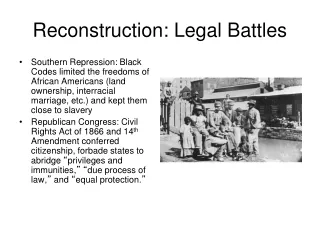
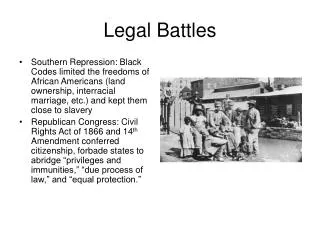
Legal Battles • Southern Repression: Black Codes limited the freedoms of African Americans (land ownership, interracial marriage, etc.) and kept them close to slavery • Republican Congress: Civil Rights Act of 1866 and 14th Amendment conferred citizenship, forbade states to abridge “privileges and immunities,” “due process of law,” and “equal protection.”
Jim Crow Era • Denial of Votes: poll tax, literacy tests, and grandfather clause • Segregation: “Separate but equal” schools, public transportation and accommodations
Washington vs. Dubois • Booker T. Washington: Accomodationist strategy of economic progress first • W. E. B. Dubois: Priority in struggle for political equality