Photosynthesis
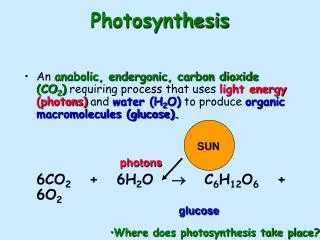
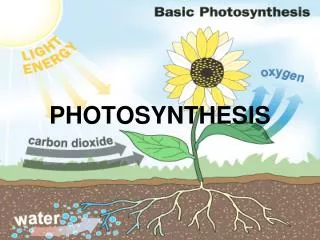
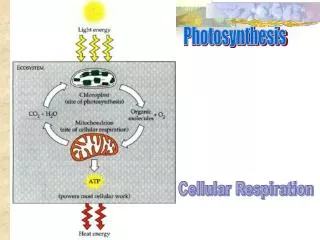
This overview explores the vital processes of photosynthesis and cellular respiration. Photosynthesis consists of two main stages: light-dependent reactions, where energy from sunlight is trapped and used to produce NADPH and ATP, and the Calvin Cycle, which converts CO2 into organic compounds like glucose. Cellular respiration involves glycolysis, the Krebs cycle, and the electron transport chain, where glucose and oxygen are utilized to generate ATP. This comparison highlights their roles in plant metabolism, energy conversion, and the interdependence of these essential biological processes.

Photosynthesis
E N D
Presentation Transcript
Photosynthesis Cellular Respiration
Pigments Accessory Pigments Absorb certain wavelengths of light while reflecting others.
Plants use electron carriers to transport high-energy electrons from chlorophyll to other molecules. • NADP+(nicotinamide adenine dinucleotide phosphate) is a carrier molecule. • NADP+ picks up two high-energy electrons, along with a hydrogen ion (H+). It is then converted into NADPH. • The NADPH can then carry the high-energy electrons to be used in chemical reactions elsewhere in the cell.
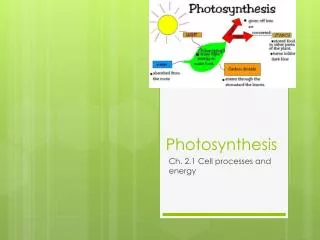
Light reactions: Light dependent water is split NADPH and ATP are produced
Chemiosmosis: mechanism by which ATP is produced by the flow of H ions against a concentration gradient
Step 3: With CO2, convert temporary chemical energy into organic compounds (glucose). Calvin Cycle
Cellular Respiration Using glucose and oxygen to make ATP for the cell’s metabolism.
Glycolysis • Anaerobic • Occurs in the cytoplasm • Glucose is converted to two pyruvic molecules with the help of 2 ATP • Net yield of 2 ATP are made • 2NADH are also produced
Products: 2 Pyruvic Acid 2 NADH 2 ATP
Aerobic Respiration Krebs Cycle and Electron Transport Chain
Aerobic Respiration • Occurs in the mitochondria • Oxygen is required for reaction to occur • Pyruvic acid is needed from glycolysis • Enzyme-directed reactions which produce CO2, ATP, FADH2 and NADH
How many times does the Kreb cycle go around for one glucose molecule? How much ATP is produced in this cycle? How much ATP has been produced so far with Krebs and Glycolysis?
ETC • Electron Transport Chain • Aerobic • All NADH and FADH2 produced gives up their electrons to a series of electron accepting proteins. • Main production of ATP occurs here.
How does it happen? What are the necessary reactants?