Innovate Your Course: Principles and Strategies for Effective Redesign
170 likes | 280 Vues
Explore course redesign principles, essential elements of syllabi, and communication strategies to enhance student learning outcomes. Plan, review, and brainstorm alternative methods to engage students effectively.
Innovate Your Course: Principles and Strategies for Effective Redesign

E N D
Presentation Transcript
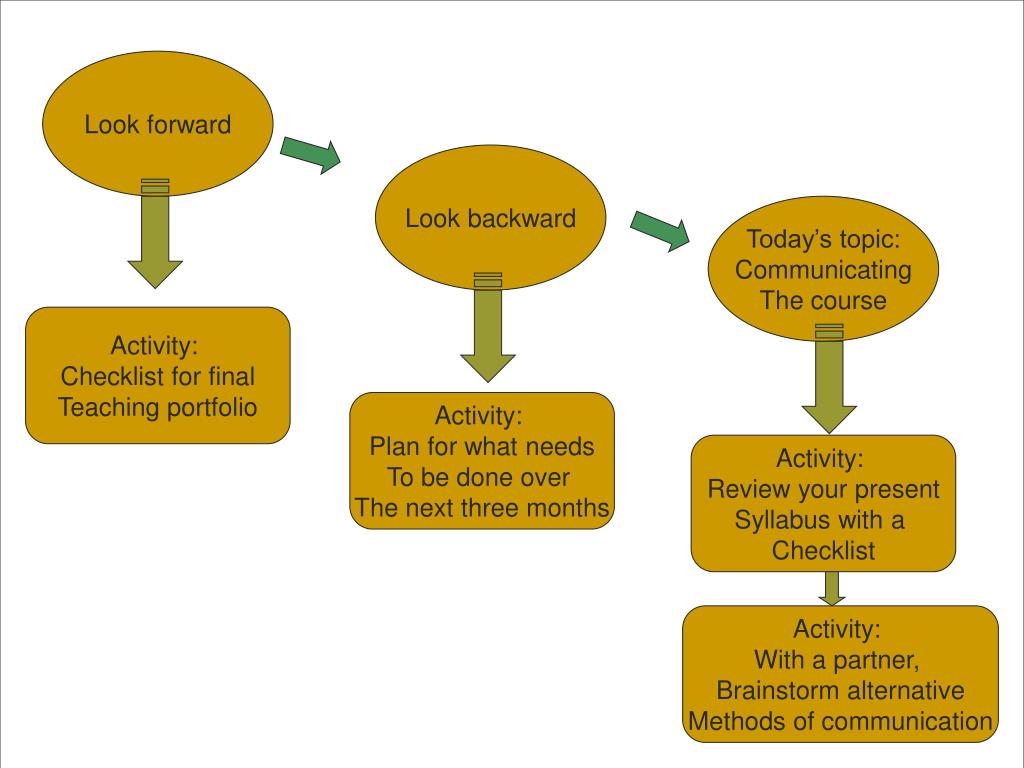
Look forward Look backward Today’s topic: Communicating The course Activity: Checklist for final Teaching portfolio Activity: Plan for what needs To be done over The next three months Activity: Review your present Syllabus with a Checklist Activity: With a partner, Brainstorm alternative Methods of communication
Re-Presenting Your Course Syllabus, Calendar, Text, Materials
Course Redesign • Course redesign is the process of restructuring the way the content of a course is delivered. It generally involves the redesign of an entire course (rather than individual classes or sections) to achieve better learning outcomes.
5 Principles of Course Redesign • Principle #1: Redesign the whole course. • Principle #2: Encourage active learning. • Principle #3: Provide students with individualized assistance. • Principle #4: Build in ongoing assessment and prompt (automated) feedback. • Principle #5: Ensure sufficient time on task and monitor student progress.
Essential Elements • Goals, Objectives, Outcomes • Activities • Feedback • Assessment • Materials (Reading, Viewing, Interacting, Experimenting)
Communication with Students • Verbal • Syllabus • Web site
Three strong beliefs associated with a course syllabus • The syllabus is the key tangible evidence of planning from instructor to the world. • The planning manifested through the syllabus can reduce, before a class even meets, about half the work for teaching a course. • The syllabus serves as a communication device and contract to shift the responsibility for learning to the student. Performance Instruction: Planning, Delivering, Evaluating, by Daniel E. Vogler, 1991.
Purposes of the Syllabus • Offer students a clear and concise statement of what your course is about; • Tell them how you are going to teach the material to them and why; • Provide all the logistical information they need to engage you and the course materials easily; • Explain to them exactly what is required of them, when and why; • Lay out for them the essential elements of the social contract that you and they are entering into.
3 Functions of Syllabi • Motivation: a warm tone and inclusive, accessible writing motivate students to engage with the course; positive presuppositions expressed about students facilitates in them a positive self-fulfilling prophecy. Slattery, J. M. and Carlson, J. F.(2005).Preparing an effective syllabus: current best practices. College Teaching, 53, pp. 159-165.http://www.ctl.csus.edu/EffectiveSyllabi.html
3 Functions of Syllabi • Structure: a clear map of topics and related assignments and due dates facilitates proper student planning. Writing a clear syllabus helps us, as faculty, grasp the plan and purpose of the course deeply.
3 Functions of Syllabi • Evidence: in case of disputes regarding the course, the syllabus is often used by administrators or mediators to resolve them; in tenure and promotion cycles, syllabi are important documents as evidence of currency, innovation and mastery of course material; students need well-designed syllabi to facilitate transfer of credits between departments or institutions.
How Blackboard Influences Communication http://blackboard.uc.edu
Essential Elements of a Syllabus • Course Name • Instructor Contact Information • Class Meeting Days, Times, and Locations as appropriate • Course Overview/Introduction • Course Motivational statement • Course Goals • Student Performance Objectives • Course alignment • Content outline • Course schedule
Essential Elements of a Syllabus • Text(s) and Readings • Student Performance Assessments • Project/Papers/Products • Tests/Examinations • Basic Classroom Management Policies • Attendance/Tardy Policy • Late Submissions • Other responsibilities (lab work, field work etc.) • Grading • "Academic dishonesty" statement
The syllabus as a legal document http://www.hamptonu.edu/administration/provost/cte/whitepapers/legally_sound.htm
Design issues • Font • White space • Graphics
Samples of Syllabi from Carnegie Mellon • http://www.cmu.edu/teaching/designteach/design/syllabus/samples-creative/index.html