Deep Crack Sealing with Chipseal: Project Overview and Progress Update
350 likes | 479 Vues
This project overview details the deep crack sealing method using chipseal to extend the lifespan of a road in need of repair without fresh asphalt. The current status assesses progress since the last milestone, including tasks completed and new issues that have emerged. Key timelines, costs, and resolutions for problems encountered during the process are discussed. A test area of 920 feet was successfully sealed, demonstrating effective results. The conclusion emphasizes evaluating this method for roads requiring alternative treatment options to prolong usability.


Deep Crack Sealing with Chipseal: Project Overview and Progress Update
E N D
Presentation Transcript
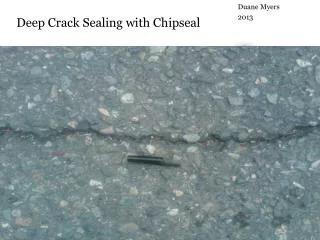
Deep Crack Sealing with Chipseal Duane Myers 2013
Project Overview • Help this road survive without fresh asphalt for a few years while the overlay budget bounces back.
Current Status • What progress has been made since the previous milestone? • Which tasks have been completed? • What issues have been resolved? • What new issues have risen? * • Is the project currently ahead of schedule, on track, or delayed? • If delayed, what is the mitigation plan?
Issues and Resolutions • Description of the issue • How was it resolved? • What and how did it impact the project? • Time • Cost • Other
Details • The test area we did was 920’ long and 24’ wide counting both lanes. • It took 3 hours for the crew to seal it. • Total cost of the work including materials was $8500. • A year and a half later the alligator section is still sealed up and keeping water out. • Cosmetically the road isn’t as pretty but, the road will likely hold up for another 4 or 5 years in the worst sections.
Conclusion • We will consider this treatment again for roads that are too far gone for a conventional chip seal to work. • The biggest challenge to making this work is figuring out how to work it into the program so we don’t lose mileage for the rest of the program.