The Decade of Dissent (1850-1860): Key Events Leading to the Civil War
90 likes | 223 Vues
The decade of 1850-1860 was marked by intense conflict over slavery in the United States, culminating in the outbreak of the Civil War. The Compromise of 1850 introduced California as a free state, allowed slavery in New Mexico, and enforced a stronger Fugitive Slave Act. The Kansas-Nebraska Act of 1854 abandoned previous compromises, leading to violent confrontations in "Bleeding Kansas." Landmark cases like the Dred Scott decision further inflamed tensions. The Lincoln-Douglas debates in 1858 and John Brown's raid in 1859 intensified divisions, setting the stage for Lincoln's election and the nation's descent into civil conflict.


The Decade of Dissent (1850-1860): Key Events Leading to the Civil War
E N D
Presentation Transcript
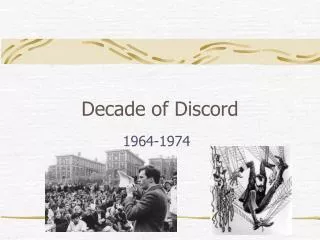
Decade of Dissent 1850-1860
Compromise of 1850 • California a Free State • New Mexico Terr. – slavery allowed • Slave trade banned in D.C. • Stronger Fugitive Slave law • Taylor as President followed by Fillmore
Fugitive Slave Act • All citizens must help catch runaway slaves. • If you aided a runaway, you would be fined/punished.
Kansas- Nebraska Act - 1854 • Abandoned the Missouri Compromise • Slavery in territories would be determined by popular sovereignty (people would vote) • Pierce as President.
Bleeding Kansas • Pro slavery and anti slavery forces arm themselves in response to the “fixed” elections. • Conflict over slavery erupts in a violent civil war! • Violence erupts in Congress!!!
1857 – Dred Scott Decision • Landmark Court Case – • Supreme Court rules that Congress has no power to rule on slavery in territories! • According to the 5th Amendment, Congress is prohibited from taking property, and slaves are property. • Dred Scott is a slave and therefore is NOT a citizen, and does NOT have rights! (Cannot sue for his freedom)
1858 – Lincoln-Douglas Debates • Debated 7 times • Slavery is the main topic • Lincoln –Republican – took “middle road” view on slavery. • “A house divided cannot stand” • Douglas – use popular sovereignty to decide
1859- John Brown Raids • Organized antislavery movement, attempted to help free enslaved people, by arming them with ammunition from stolen from Harper’s Ferry arsenal. • Quickly put down by local citizens and federal troops. • John Brown becomes a martyr in the North • Conspiracy from Southern point of view.
1860- Lincoln Wins the Election (uh oh…..) • People voted along sectional lines (sectionalism) • N – Republican • S- Democratic