Key Events of the American Revolution: From the Boston Tea Party to Independence
Explore the critical events leading up to American independence, including the Boston Tea Party's impact on the Coercive Acts of 1774 and the significance of key figures like Thomas Paine and Benjamin Franklin. Discover the origins of the colonies such as Pennsylvania and Massachusetts, the effects of the Stamp Act, and the role of the Treaty of Paris in recognizing the United States as a sovereign nation. Analyze the implications of the Boston Massacre and the Mayflower Compact in shaping democratic governance and colonial resistance against British rule.

Key Events of the American Revolution: From the Boston Tea Party to Independence
E N D
Presentation Transcript
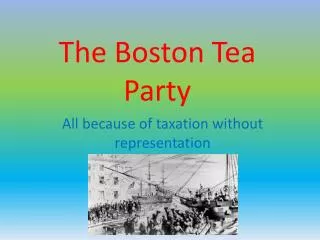
Boston Tea Party Led to the passage of the Coercive Acts in 1774
Pennsylvania Site of a colony founded by the Quakers
Samuel de Champlain A French explorer who set up the trading post of Quebec
Battle of Saratoga Convinced French to provide aid to the Americans
The Stamp Act Passed by the British in an effort to raise money
Indentured servants Worked to pay for their passage to America
Mayflower Compact Set up a democratic civil government in Plymouth
Lexington “shot heard ‘round the world” was fired here
Thomas Paine Called for the complete separation from Britain
Benjamin Franklin Famous American inventor
John Winthrop Led the group of Puritans who set up the colony of Massachusetts
Treaty of Paris Recognized the United States as an independent nation
militia Group of citizen soldiers
Boston Massacre Killed five colonists on March 5, 1770
Propriety colony Owned by an individual or a small group of people
Slave codes Strict laws governing the behavior and punishment of enslaved Africans
Roanoke Site of the “Lost Colony”
Declaration of Independence Approved by Continental Congress on July 4, 1776
Subsistence farmers They produced just enough to feed their families
Olive Branch Petition Asked King George 3rd to protect the colonists’ rights