Download
1 / 1
10 likes | 140 Vues
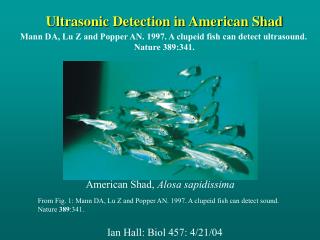
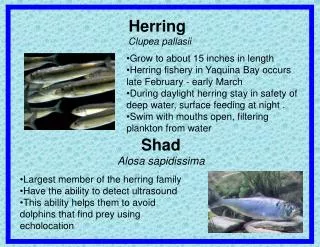
The Herring (Clupea pallasii) grows up to 15 inches and is prominent in Yaquina Bay's late February to early March fishery. Herring stay in the safety of deep waters during daylight, surfacing at night to feed on plankton while swimming with mouths open for filtration. The Shad (Alosa sapidissima), the largest member of the herring family, possesses the remarkable ability to detect ultrasound, aiding in evasion from dolphins that use echolocation to hunt prey. Together, these species highlight the intricate dynamics of marine life.

E N D
Herring Clupea pallasii • Grow to about 15 inches in length • Herring fishery in Yaquina Bay occurs late February - early March • During daylight herring stay in safety of deep water, surface feeding at night . • Swim with mouths open, filtering plankton from water Shad Alosa sapidissima • Largest member of the herring family • Have the ability to detect ultrasound • This ability helps them to avoid dolphins that find prey using echolocation