SlideServe
Menu
Préférences
© SlideServe · v2026

Option G – Electromagnetic waves

nasya avatar
13 diapositives · 341 Views · Sep 17, 2014

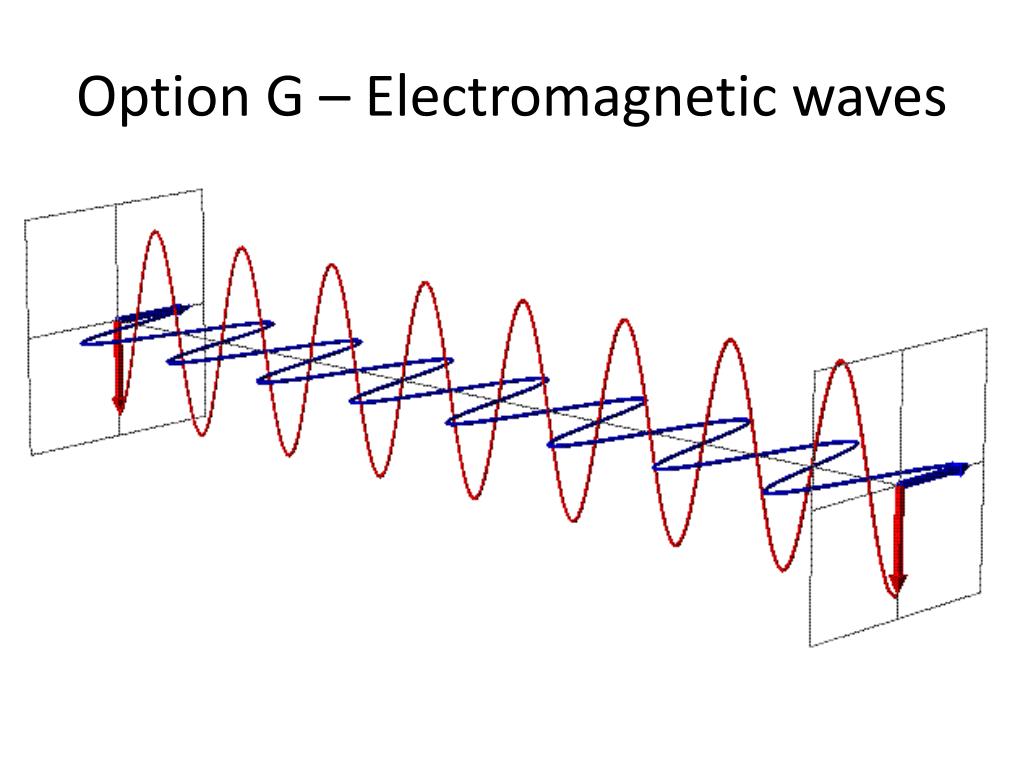
This lesson provides an introduction to the nature of electromagnetic (EM) waves, explaining how oscillating electric charges create varying electric and magnetic fields that travel as transverse waves at a constant speed in a vacuum. The different regions of the electromagnetic spectrum, from radio waves to gamma rays, are outlined, along with the concept of dispersion, which describes how light waves bend when passing through different media due to varying refractive indices. Key concepts include Snell's law and the dependence of refractive index on wavelength.
Option G – Electromagnetic waves - slide 1
01 / 13Option G – Electromagnetic waves
1 / 17

Télécharger la présentation

Option G – Electromagnetic waves
Une image / un lien ci-dessous est fourni (tel quel) pour télécharger la présentation

Politique de téléchargement : le contenu du site vous est fourni TEL QUEL pour votre information et votre usage personnel ; il ne peut être vendu, concédé sous licence ni partagé sur d’autres sites sans l’accord de son auteur.Le contenu vous est fourni TEL QUEL, pour votre information et votre usage personnel uniquement. Téléchargez la présentation en cliquant sur ce lien. Lors du téléchargement, si vous ne parvenez pas à télécharger une présentation, l’éditeur a peut-être supprimé le fichier de son serveur.Pendant le téléchargement, si vous ne parvenez pas à obtenir une présentation, le fichier a peut-être été supprimé par l’éditeur.

F I N

Plus de contenu associé

Transcription de la présentation
  1. Option G – Electromagnetic waves

  2. Lesson 1 • Outline the nature of electromagnetic (EM) waves. • Describe the different regions of the electromagnetic spectrum. • Describe what is meant by the dispersion of EM waves. • Describe the dispersion of EM waves in terms of the dependence of refractive index on wavelength.

  3. Nature of electromagnetic waves

  4. Nature of electromagnetic waves • An oscillating electric charge produces varying electric and magnetic fields. • Electromagnetic waves are transverse waves and all have the same speed in a vacuum.

  5. Electromagnetic spectrum λ ≈ 700 - 420 nm λ ≈ 10-4 - 10-6 m λ ≈ 10-7 - 10-8 m λ ≈ 10-9 - 10-11 m λ ≈ 10-2 - 10-3 m λ ≈ 10-1 - 103 m λ ≈ 10-12 - 10-14 m

  6. Source of electromagnetic waves? • You have 15 minutes to take notes from pages 600 and 601 about how different EM waves are produced. http://phet.colorado.edu/sims/radio-waves/radio-waves_en.jar

  7. Sources of EM radiation

  8. Dispersion Let’s make rainbows!

  9. A reminder - Snell’s law speed in substance 1 sinθ1 speed in substance 2 sinθ2 =

  10. A reminder - Snell’s law In the case of light only, we usually define a quantity called the index of refraction for a given medium as n = c cm where c is the speed of light in a vacuum and cm is the speed of light in the medium c vacuum cm

  11. Dispersion • This occurs because the index of refraction of the glass changes with wavelength. The index of refraction is slightly smaller for red light than it is for blue light, so the red light gets bent less.

  12. Dispersion

  13. Just one question! Page 605 Question 3