Download
1 / 23
240 likes | 431 Vues
The Industrial Revolution, spanning from the 1750s to the present, brought profound changes to society through innovations by key figures like Thomas Newcomen, James Watt, and Eli Whitney. Their inventions, such as the steam engine and interchangeable parts, revolutionized manufacturing and transportation. Notable contributions like the Bessemer Converter allowed for the mass production of steel, while Henry Ford's assembly line streamlined production processes. This transformative period not only made goods cheaper and accessible but also marked a significant evolution in labor specialization and women’s rights.

E N D
1750’s - Present The Industrial Revolution
Eli Whitney “CLAIM TO FAME” -Interchangeable parts PRACTICAL USES: -Goods cheaper and easier to fix -Mass production of goods -Specialization of Labor
George Stephenson “CLAIM TO FAME”-Built the 1st effective Steam Locomotive -“The Rocket” PRACTICAL USES: -Mass transportation of goods over land
Sir Henry Bessemer • “CLAIM TO FAME” -The original “Man of Steel” -Invented the Bessemer Converter • PRACTICAL USES: -Invented a way to mass produce steel -Stronger and lighter than iron
Early Switchboard Switchboard operator
Early Rotary Phone Modern Rotary Phone
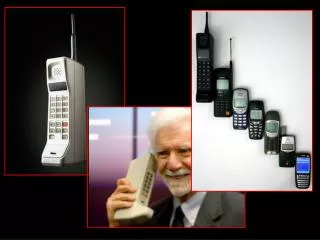
Cell Phone Inventor Cell Phone Tower
Thomas Edison Livermore, California Firehouse light bulb: http://www.roadsideamerica.com/set/lightbulbs.html
Guglielmo Marconi • “CLAIM TO FAME” • Built the radio • PRACTICAL USES: • Transmits sounds over long distances without wires
Henry Ford • “CLAIM TO FAME” • Assembly line production • PRACTICAL USES: • Made mass production of goods easier
Leisure Activitiesof the early 1900’s Coney Island - 1906 Map