The Rise of Rome: Conquests, Challenges, and the Legacy of the Roman Republic
470 likes | 596 Vues
Explore the intricate history of the Roman Republic from the 5th to the 2nd centuries B.C.E. Witness how Rome transformed into a dominant power through a series of wars fueled by fear, ambition, and the desire for wealth. Understand the socio-political upheavals that resulted from military conquests, the integration of conquered peoples, and the emergence of client armies. The narrative delves into significant events, including the Punic Wars and internal conflicts such as the Social War, revealing how these shaped the Republic's ambitious expansion and ultimate instability.


The Rise of Rome: Conquests, Challenges, and the Legacy of the Roman Republic
E N D
Presentation Transcript
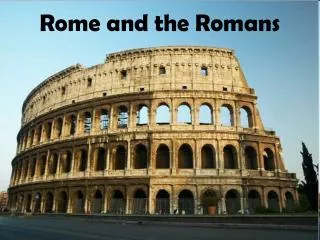
Rome and the Romans Rome and the Romans
Roman Republic • 5th-2nd centuries B.C.E. • Roman citizens fought war after war in Italy until they became the most powerful state • Rome = major power
Roman Republic • Two principal motivations dominated Roman imperialism under the Republic: fear and ambition • national security led to pre-emptive attacks against “enemies” who might attack Rome • Everyone longed to capture wealth on foreign military campaigns • Poor soldiers: hoped their gains would pull their families out of poverty • Elite: increase their riches and acquire glory as commanders, to promote their public careers
Roman Republic • Conquests and spoils = expansion and wealth • Social and political consequences disrupted traditional values and stability • Romans believed they were successful because they respected the will of the gods
Roman Republic • Generous peace terms to former enemies • Some became Roman citizens • Others gained limited citizenship w/out right to vote • Still others received treaties of alliance • No conquered Italians had to pay taxes to Rome • But, military aid in future wars required • But this gained them slaves and land
Roman Republic • For security, Rome planted colonies of citizens and constructed roads up and down the peninsula to allow troops to march faster • Roads connected the diverse peoples of Italy, creating unity under Rome
Unity in Roman Republic • Latin • Wealth attracted people to the capital • Public works projects • New aqueducts to provide fresh, running water • massive building program • Rich patricians and plebeians cooperated to • All groups exploited Roman territories, lessening class distinctions. Social unity.
Wars in the Roman Republic • Punic Wars • First Punic War (264-241 B.C.E.) • Rome and Carthage both came to aid a band of mercenaries in Sicily • Lasted a generation
Punic Wars • Why did Rome eventually win? • Manpower reserves • Money • sacrifice • Roman victory in the First Punic War made them masters of Sicily
Second Punic War • 218-201 B.C.E. • Hannibal (247-182 B.C.E.) led Carthage • Troops and war elephants over the Alps– Rome suffered its worse defeat in 216 B.C.E. • Alliance with Macedonia made Rome fight a second front in Greece
Rome’s Revenge: Third Punic War • Invaded Carthage • Roman peace terms were harsh • Carthage: no navy • Pay cost of war over 50 years • Give Spain to Rome • Also • Carthage destroyed, salted earth • Macedonia (Greece) also made into a Roman province
Rome emerges as Leader • In 133 B.C.E., King Attalus III of Pergamum left his Asia Minor kingdom to Rome in his will • In 121 B.C.E., the lower part of Gaul across the Alps was made into a province • Rome governed and profited • 2/3 of the Mediterranean region • Only easternmost Mediterranean lay outside its control
Internal ConflictLate Roman Republic: 133-44 B.C.E. • Instead of warring with others, the Republic went to war with itself • Reforms to help small farmers – the backbone of the army – failed • “client armies” undermined the faithfulness to the general good of the community
Late Roman Republic • As a result of the upheavals, members of the elite positioned themselves either • “supporters of the people,” referred to as populares • Or “of the best,” referred to as optimates
New Leadership • Challenged the political dominance of the traditional elite • Gaius Marius (c. 157-86 B.C.E.) not from Rome’s elite, but from the equestrian class to become consul • Elected six times • Voted a “triumph”-- Rome’s • ultimate military honor
Gaius Marius • Opened the ranks of military service to proletarians, changing the whole concept of citizen armies • Soldiers became loyal to their general instead of the Republic • Soldiers were clients of their patron and general
Sulla • Corrupt Roman noble • Exploited uprisings in Italy and Asia Minor in the 1st • century B.C.E. • – Used client army to seize high office and compel • the Senate to do his wishes • –Traditional values no longer restrained commanders • Prized advancement and enrichment of their troops above peace and the good of the community
The Social War • Late Roman Republic • 91-87 B.C.E. • Conquered upper classes wanted a greater share of prosperity that war had brought the [Roman] citizen elite • Rebelled, finally granted full citizenship (including voting rights) • Convinced Rome that conquered people could strengthen Republic
Other Wars: 88-44 BCE • An Ally, King Mithridates VI of Pontus, instigated a rebellion against Rome’s control of the region, especially its tax collectors • Denounced Rome, killed Italians in Pontus • Over 10,000 in a single day • Senate authorized a military expedition • Sulla and Marius argue over leadership • Sulla loses, loots Rome, THEN marches to destroy Pontus
Sulla Returns, Wins • 83 B.C.E • Battle at the gates of Rome • Sulla destroys everyone who had opposed him • Proscription – posting list of all those guilty of treasonable crimes, so anyone could hunt them down and execute them • Property of those proscribed was confiscated, so victors fraudulently added to the list the names of • anyone whose wealth they desired • The Senate appointed Sulla dictator – a temporary emergency office – without any limit of term
Sulla Retires • Believing a prophecy that he would soon die, Sulla retired in 79 B.C.E. • His career showed strengths and weaknesses of the social and political values of the Republic • Republic doomed because “way of the ancestors” that valued respect for peace, prosperity, and traditions was ignored in favor of personal gain
After Sulla • The great generals whose names dominate the • history of the Republic all took Sulla as their • model: • professing allegiance to the state • pursed their own advancement. • Pompey and Caesar gained glory and prodigious • wealth for themselves • Eventually fought against each other • Ruined the Republic • Opened the way for the return of a monarchy after 500 years
Pompey • Young • Private army to fight for Sulla • Spectacular victories • Put down a rebellion in Spain • Put down the slave rebellion led by Spartacus in 71 B.C.E.
Pompey • Elected Consul in 70 B.C.E., before he had • reached the legal age of 42 or even held any • other office • Later received command with unlimited powers to exterminate pirates • Wildly popular but Senate distrusted him, forcing him to ally with opponents Crassus and Caesar
First Triumvirate • Their combined influence proved unstoppable • Pompey had laws passed to establish his firm control over eastern territories • Caesar became consul in 59 B.C.E. and received special command in Gaul, giving him a chance to build his own client army financed with barbarian booty • Crassus received financial breaks for Roman tax collectors in Asia Minor, whose support gave him clout and in whose business he had a stake
Caesar • To cement his bond with Pompey, Caesar married his daughter Julia to Pompey in 59 B.C.E., even though she was engaged to someone else • Meanwhile, Caesar cemented his client army’s affection and loyalty with victory after victory and plunder in northern Gaul • Enemies in Rome dreaded each success • Julia died in childbirth in 54 B.C.E., ending bond with Pompey • Caesar dismissed as failure • Triumvirate dissolved in 53 BCE
Caesar strikes back • Pompey appointed sole consul and ordered Caesar must surrender his command • Caesar led his army, crossing the Rubicon River (the northern boundary of Rome) in 49 B.C.E., saying “the dye is cast” • Troops and people followed him • Fear drove Pompey and most of the • Senate out of Rome
The End of Pompey, Caesar’s Success • Peaceful entrance, then on to Spain and Greece • Pompey fled to Egypt, murdered by the ministers of the king, Ptolemy XIII • Caesar invaded Egypt • drowning death of the Pharaoh • Caesar restored Cleopatra VII as Queen, fell in love
Caesar as “King” • Caesar’s solution was to rule as king in everything but name, right down to his golden “chair” in the Senate • 48 B.C.E., has himself appointed dictator • Lifetime, in 44 B.C.E.
Caesar as Dictator • Ambitious and broad: • Moderate cancellation of debts • Limitation of the number of people for subsidized grain • Large public works programs, including the • construction of public libraries • Colonies for his veterans in Italy and abroad • Rebuilt Corinth and Carthage as commercial centers • Revived citizenship to non-Romans • Admitted non-Italians to the Senate, expanded membership from 600 to 900 • Roman calendar = 365 days
The End • Marcus Brutus, conspired against Caesar • • They stabbed him to death in the Senate on the Ides of March (March 15), 44 B.C.E. • Collapsed at the feet of Pompey’s statue • Rome was now in complete disorder
Julius Caesar • Caesar’s reforms alienated Rome’s elite . Saw his as tyrant. • 44 B.C. • Assassination • View scenes from Caesar • http://www.youtube.com/watch?v=Je0gTnheVe4 • http://www.youtube.com/watch?v=ab68AjRMKmA • http://www.youtube.com/watch?v=t1VkK86Sdmo&feature=related
Octavian • Octavian -- related to Caesar • Defeated Mark Anthony and Cleopatra in 31 B.C. Anthony and Cleopatra by Sir Lawrence Alma-Tadema
Augustus • 27 B.C. • “Augustus” suggests a divine or semi-divine nature • 45 years: “a monarchy disguised as a republic” • Pax Romana
Augustus • Centralized political and military power • Preserved traditional republican offices and forms of government and included members of the Roman elite in his government
Government under Augustus • Accumulated vast powers for himself and ultimately took responsibility for all important governmental functions • Placed individuals loyal to him in all important positions • Reorganized the military system • Created a new standing army with commanders who owed allegiance to him • Eliminated the personal armies of earlier years • Stabilized the land after the years of civil war
Mare Nostrum • Roman Empire surrounded the Mediterranean • mare nostrum (“our sea”) • Expansion brought Roman soldiers, diplomats, governors, and merchants throughout the region • Trade flourished Roman Empire, 117 A.D.
Pax Romana • “Roman peace” facilitated trade and communication • 27 B.C. to 180 A.D. • Standards of justice and a basic code of law throughout the empire
Life for the Rich Public Life • Pax Romana provided prosperity for many • Rich citizens • Had both city, country homes • Homes had conveniences like running water, baths • Wealthy men spent much time in politics • Public officials not paid; only wealthy could afford to hold office • Roman politicians worked to perfect public-speaking skills • Ties of marriage, friendship, family alliances as important as common interests for public officials, political groups Life in Imperial Rome
Life for the Poor • Nearly 1 million Romans lived in crowded three- or four-story apartment buildings • Fire a constant threat • To keep poor from rebelling • Free food, public entertainment offered • Two things interested public—bread, circuses
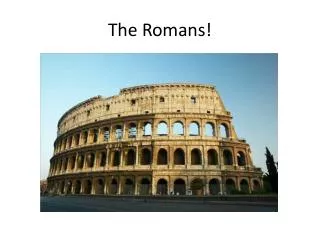
Public Entertainment • Entertainments • Romans of all classes enjoyed circus, chariot races • Circus Maximus—racetrack could hold 250,000 spectators • Also liked theater, mimes, jugglers, dancers, acrobats, clowns • Bloody Spectacles • Spectacles in amphitheaters • Wild animals battled, professional fighters • Gladiator contests most popular, performed in Colosseum for 50,000 people • Public Baths • Popular places for entertainment • Romans well aware of importance of bathing, hygiene for health • Many public baths had steam rooms, meeting rooms, and pools for socializing
Education and Religion Patriarchal Structure • Upper class Romans placed great value on education • Parents taught children at home; wealthy families hired tutors or sent sons to exclusive schools to learn Latin, Greek, law, math, public speaking • Romans adopted much from Greek mythology, also from Egyptians, others • Each family worshipped local household gods, penates • Many worshipped emperor • Head of family—paterfamilias, family father—oldest living male • Had extensive powers over other members of family • Within family structure, virtues of simplicity, religious devotion, obedience emphasized • Adoption important in Roman society, a way to ensure family name would be carried on • Women could do little without intervention of male guardian, more freedom in lower classes Family
Signs and Augurs • Romans believed gods sent signs, warnings • Came in form of natural phenomena • Flight of birds, arrangement of entrails of sacrificial animals • Paid respect to augurs • Priests who specialized in interpreting signs • Nothing important undertaken without first consulting augurs
How were populations controlled by the Romans? • Under the republic • Representation (consuls and Senate) • Resolution of conflicts between the patricians and plebeians (tribunes) • Dictators • Under the empire • Julius Caesar centralized authority but alienated elite • Augustus continued centralization but placated elite and ensured loyalty through patronage • Pax romana stabilized region through trade, communication, and law
EARLY CHRISTIANITY • Roots in Judaism, John the Baptist, Jesus, and apostles • Earliest converts were Jews who did not think they were breaking away from Hebrew Law • Jewish religion was officially recognized by the Roman government and had certain privileges
POPULAR HOSTILITY • Christian Church seen as dangerous state within a state. Feared divided loyalties. • Initially, no persecution of Christians • Strong popular aversion to Christians continued to exist • Massacres
CHURCH AND STATE • Throughout the empire, church leaders adopted an independent attitude towards the state • After fall of Rome, what remained of towns and cities looked to Church, not the corrupt state, for protection and justice