Essential Houseplant Care: Fertilization, Watering Tips, and Orchid Insights
50 likes | 174 Vues
Discover comprehensive guidelines for caring for houseplants, including effective fertilization techniques and essential watering practices. Learn about different types of fertilizers, such as granulated, slow-release, water-soluble, and organic options. Get tips for watering, including using warm water and understanding your plant's specific needs. Explore growing basics like ideal light conditions, temperature range, humidity maintenance, and potting requirements. Highlighted is the orchid, specifically Phalaenopsis, with its unique care needs and environmental preferences.


Essential Houseplant Care: Fertilization, Watering Tips, and Orchid Insights
E N D
Presentation Transcript
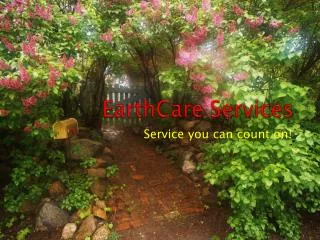
Planting ServicesEarthCare Services HOW TO CARE FOR HOUSEPLANTS
TYPES OF FERTILIZER • Granulated • Economical • Reapply every few weeks • Slow-release • Relatively expensive • Lasts several months • Rarely burns plants • Water soluble • Takes effect quickly • Must be applied on a regular basis • Organic • Slow releasing • Very safe for plants • Expensive
WATERING TIPS • Use warm water • Water before plant wilts • Know your plant, and water from above or below as necessary • Soil should be thoroughly soaked, without overwatering
GROWING BASICS • Bright light, but NOT direct sunlight • 65 to 70 degrees Fahrenheit with relative humidity • Spray with water several times a day • Keep pot in a tray of damp pebbles • Do not over water • Soil should be a mixture of dirt, peat, sand, and vermiculite • Good drainage • Air can circulate to roots • Feed plants with fertilizer
FEATURED PLANT—THE ORCHID • Thousands of orchid species • Phalaenopsis is the best indoor orchid • The Pot • Should be free-draining • Water cannot accumulate around roots • Light • Moderate light • Not direct sunlight, but not dark • Temperature • 75 degrees Fahrenheit during the day • 55-60 degrees Fahrenheit at night • Humidity at 50% • Water • Depends on plant species • Depends on light