Understanding Economic Risks: Factors Impacting Business Success
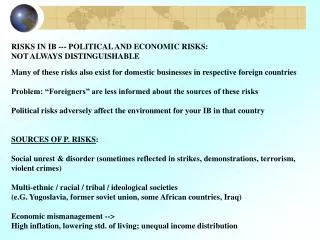
Economic risks arise from fluctuations in overall business conditions, which can come from various factors including competition, changing consumer lifestyles, and government regulations. When businesses fail to adapt their products in response to competitors’ advancements or shifts in consumer needs, they risk losing sales. Additionally, changing market conditions such as inflation and recession, along with product obsolescence, can severely impact business performance. Understanding these risks is vital for maintaining competitiveness and ensuring long-term success.


Understanding Economic Risks: Factors Impacting Business Success
E N D
Presentation Transcript
Economic Risks By: Charlotte Vosbeck and AyubAbdi
Economic Risks definition: risks that result from changes in overall business conditions. Some of these changes can include level or type of competition, changing consumer lifestyles, population changes, limited usefulness of products, and government regulation.
Businesses that fail to change their products when competitors offer more features and benefits lose sales and experience economic risk this way.
Another Economic risk is when consumer lifestyles change, if the business fails to update their products they may not meet consumers’ needs.
If a product starts to have limited usefulness or style this becomes a economic risk. People won’t buy products that they have no use for.
Changes in general business environments caused by inflation or recession can also be economic risks, for example if a business is experiencing high unemployment it will suffer through product sales as well.