Download
1 / 6
60 likes | 166 Vues
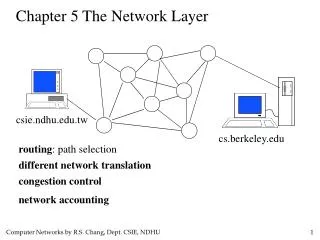
This document provides an overview of the OSI model, detailing the four upper layers: Application, Presentation, Session, and Transport, followed by the lower layers: Transport, Network, Data Link, and Physical. It also discusses the functions of the Transport Layer, emphasizing its role in end-to-end communication, flow control, multiplexing, and managing retransmissions. Additionally, it explains the responsibilities of the Presentation and Physical layers, highlighting what each layer does and does not encompass within the network architecture.

E N D
phones off(please) Questions – Network Layer Model Dr John Cowell
Q 1 • Four layers of the OSI model are used for user services. Listed in order with the upper layer first they are: • Application, Presentation, Session, Transport. • Transport, Network, Data Link, Physical • Application, Session, Presentation, Transport. • Presentation, Application, Transport, Session • Presentation, Transport, Network, data Link CSCI1412-HW-4
Q2 • What is NOT a function of the Transport Layer • End to end communication • Flow control • Multiplexing • Managing re-transmission on error detection • Breaking data into packets or frames CSCI1412-HW-4
Q3 • Which one of the following statements is performed by the Presentation layer: • Synchronising communication between applications. • Encrypt data if required. • Multiplexing of messages. • Error checking and recovery. • Manages reconnection on premature termination. CSCI1412-HW-4
Q4 • Which of the following is NOT described out by the Physical layer • The transmission media • The network topology • The electrical or optical signalling characteristics. • The organisation of data into frames • The characteristics of the transmission devices CSCI1412-HW-4
Answers • Q1 – A • Q2 – D - This is the role of the Session layer. • Q3 – B • Q4 – D – This is carried out by the Data Link layer. CSCI1412-HW-4