
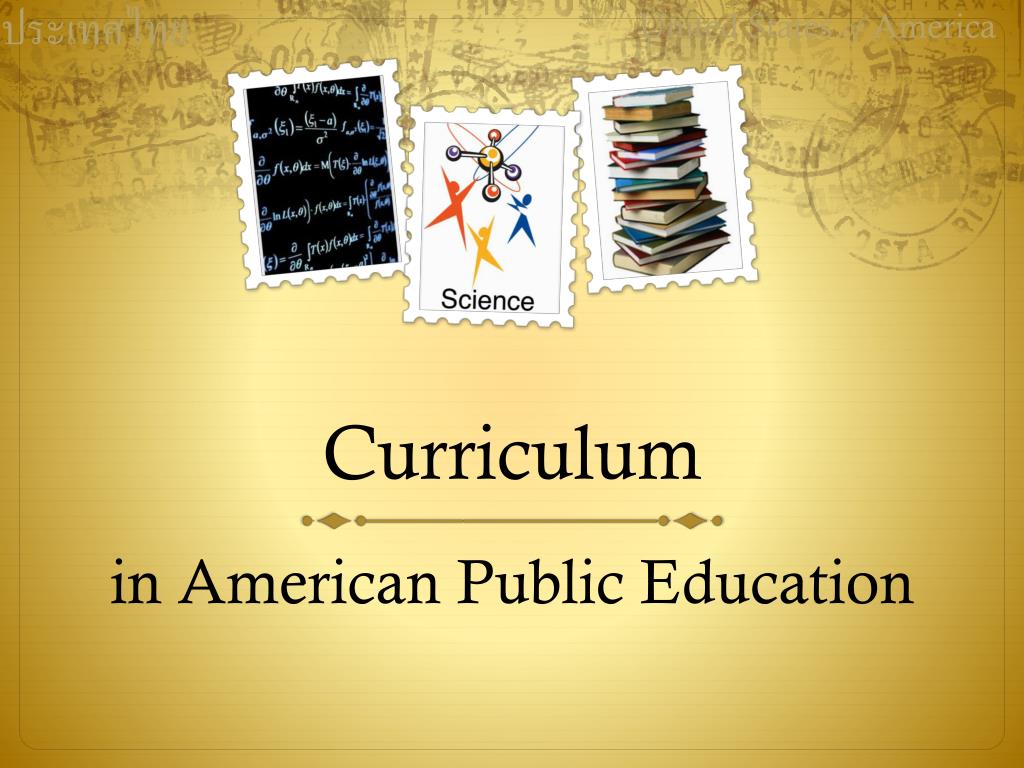
Curriculum

The U.S. Constitution grants states control over education, leaving federal involvement primarily in funding and accountability measures, such as the No Child Left Behind initiative. While states dictate essential knowledge and skills, school districts create their own curriculum based on these expectations. This structure balances a common foundation with potential limitations on choice, flexibility, and individual challenges in teaching. The curriculum includes core subjects like Math and Science, along with non-core areas such as the arts and technology. Explore the positives and negatives of this dual governance system.
Télécharger la présentation 
Politique de téléchargement : le contenu du site vous est fourni TEL QUEL pour votre information et votre usage personnel ; il ne peut être vendu, concédé sous licence ni partagé sur d’autres sites sans l’accord de son auteur.Le contenu vous est fourni TEL QUEL, pour votre information et votre usage personnel uniquement. Téléchargez la présentation en cliquant sur ce lien. Lors du téléchargement, si vous ne parvenez pas à télécharger une présentation, l’éditeur a peut-être supprimé le fichier de son serveur.Pendant le téléchargement, si vous ne parvenez pas à obtenir une présentation, le fichier a peut-être été supprimé par l’éditeur.
F I N