Understanding Immunity: Body’s Defense Mechanisms Against Infectious Agents
This overview of immunology details the body's ability to defend against infectious agents, foreign cells, and abnormal cells. It explores key concepts such as antigens, antibodies, and the different lines of immunity: non-specific and specific defenses. Non-specific immunity includes barriers like skin and mucous membranes, as well as inflammatory responses. Specific immunity involves lymphocytes (B and T cells), which provide targeted responses to pathogens. The text also covers hypersensitivities, autoimmune diseases, and immunodeficiency disorders, emphasizing the body’s complex immune system.

Understanding Immunity: Body’s Defense Mechanisms Against Infectious Agents
E N D
Presentation Transcript
Immunology BIT 120 Chapters 11
Immunity • Ability of body to defend against infectious agents, foreign cells, abnormal cells • Antigen: foreign substance/molecule which elicits an immune response • from virus, bacteria, mold, cancer, pollen • Antibody protein found in blood attacks to one particular kind of antigen and counters its effect specifically binds to antigens and marks them for destruction
Non-Specific Immunity:First Line of Defense • Does NOT distinguish between one invader and another • 1. Skin • 2. LYSOZYME in sweat, saliva, tears • enzyme which breaks bacterial cell wall • 3. mucous membranes line digestive and respiratory tract • 4. acid in stomach • 5. hair, cilia in respiratory tract
Non-specific Immunity:Second Line of Defense • FIGURE 11.1 BLOOD CELLS • 1.Inflammatory reaction (Fig 11.5) • injury • injured cells release histamine • Dilation of capillaries (increases blood flow) • Increases permeability of caps • Allows: Macrophages move to tissue to eat invader • Effects: Redness, heat, swelling, pain • Anti-inflammatory drugs- aspirin, ibuprofen
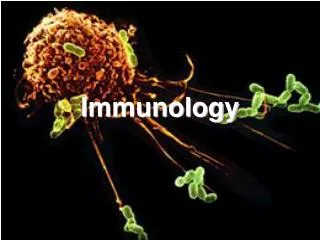
Non-specific Immunity:Second Line of Defense • 2.Interferon • released by virally infected cells • interferes with viral production of neighboring cells • 3. Phagocytes (engulf microorganisms) • A. Macrophages • B. Neutrophils • releases chemicals • 4. Natural killer cells • cause infected cells to lyse PERFORIN • cancer cells
Specific Immunity:Third Line of Defense • Comes into play when non-specific can’t do the job. • Specific for particular virus or bacteria • Explain about not getting same sickness twice. • 10E6 antigens in lifetime • KEY FEATURES • Lymphocytes (type of white blood cells) • B cells • T cells
T L Y M P H O C Y T E
Lymphocytes originatein Bone Marrow • B Lymphocytes T lymphocytes • circulate in blood and lymph circulate in blood an lymph • secretes antibodies attacks body’s cells that have been • infected with bacteria and virus • only responds to free antigen only responds to antigen on • body’s cells (needs APC) • defends against bacteria and virus also defends agst protozoans • fungi, cancer
T cell Mediated Immunity Types of T Cells Helper Cytotoxic Memory • Microbe is ingested by macrophage • Foreign protein is displayed on surface • Helper T cells recognize foreign protein with their receptor 1. make more helper T cells • 2. stimulate growth of cytotoxic T cells (which lyse cells with perforin) • 3. activate B cells to make antibodies • Memory T cells
Antibody-Mediated ImmunityHumoral Response • 1. B cell coated with its antibody (Immunoglobulin) • Antigen binds to Ab of one ‘clone’ • 2. CLONAL SELECTION • B cells becomes activated and divides/differentiates into • plasma cells which produce antibodies • Memory cells • Secondary immune response is stronger and longer • THIS SELECTION CAN ALSO BE STIMULATED BY HELPER T CELLS INTERACTING WITH B CELLS (Fig 11.9) • 3. Free Antibodies bind to antigen and cause phagocytosis and cell lysis
Antibody Fig 42.6 FIG 42.11
Allergies • Hypersensitivities to substances that are not harmful to body – • pollen • animal hair • Caused by IgE on mast cells • When antigen binds to antibody, • histamine is released from mast cell • Histamine causes cold-like symptoms • nasal irritation • tears • blood vessels dilate
Anaphylactic Shock • Extremely sensitive to allergen • Mast cells release histamine • Blood vessels dilate • Precipitous drop in Blood Pressure (SHOCK) • Possibly fatal • Treatment • Epinephrine • Increases blood pressure
Autoimmune Diseases • Body doesn’t distinguish between self and non-self correctly • lupus • insulin-dependent diabetes • rheumatoid arthritis • multiple sclerosis
Immunodeficiency Diseases • SCID severe combined immunodeficiency • no B or T cells • TREATMENT Gene therapy • AIDS • Stress • Exams vs vacation research • decreased interferon levels and • decreased natural killer cells