Adaptations: How Animals Survive in Their Environments
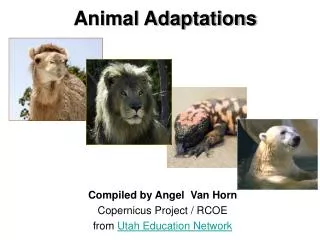
Adaptation is crucial for animal survival, allowing them to thrive in diverse environments. Animals utilize specific body parts like sharp teeth and claws for hunting and defense. For example, snow leopards possess sharp teeth for digging into prey, while bears use their sharp claws similarly. Body coverings such as scales assist fish in swimming, and bright feathers protect young peafowl. Additionally, behavioral adaptations, such as skunk spray and the long neck of giraffes for reaching high foliage, demonstrate the varied strategies animals employ to survive.

Adaptations: How Animals Survive in Their Environments
E N D
Presentation Transcript
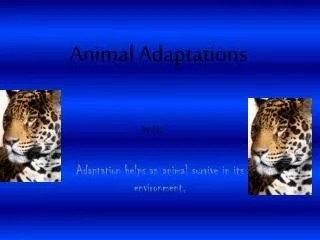
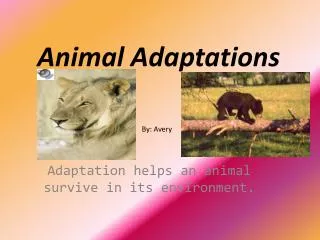
Animal Adaptations By: Avery Adaptation helps an animal survive in its environment.
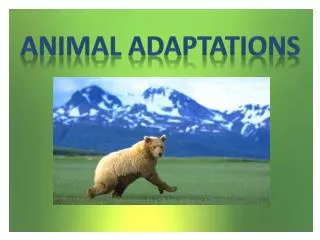
Body Parts Body parts help animals adapt in many ways 1.Sharp teeth-the snow leopards sharp teeth help it to dig into its pray. Sharp claws-the bears sharp claw help it dig in to its pray
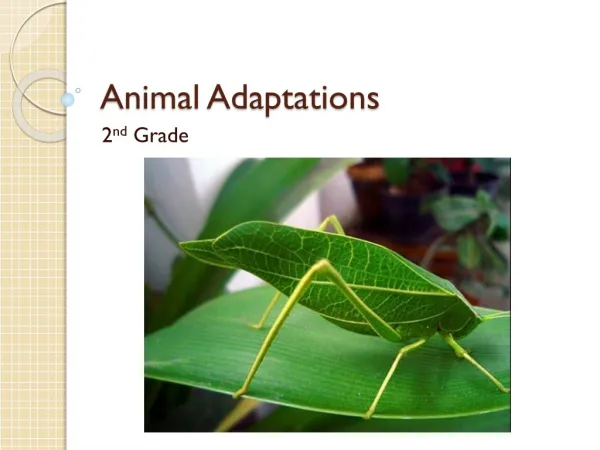
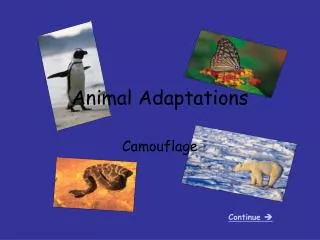
Body Coverings Body coverings help protect the animal in different environment Scales –the snakes scales help him swim in the lake. Bright feathers-the peafowl has doll feathers to protect its babies
Behavior Animal adapt to their environment behavior The skunks spray its spray when he is almost killed. He has a long neck so he can reach up high for leaves.