Impacts of Railroads and Mining on Iron Range Cities and Infrastructure
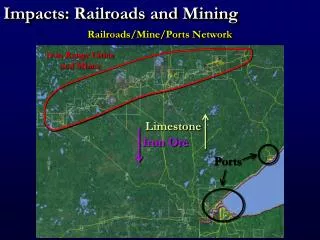
The severance of all railroads connecting mines and ports has led to significant challenges in transporting limestone and iron ore. As a result, trucking has become the primary mode of transportation, requiring hundreds of trucks operating 24/7 over long distances, increasing operational costs dramatically. Local infrastructure in Duluth faces serious strain due to steep terrain and poor conditions, with flooding exacerbating the situation. The heavy rainfall between August 15-21, 1972, caused unprecedented water levels, flooding areas previously unaffected.

Impacts of Railroads and Mining on Iron Range Cities and Infrastructure
E N D
Presentation Transcript
Impacts: Railroads and Mining Railroads/Mine/Ports Network Iron Range Cities and Mines Limestone Iron Ore Ports
Impacts: Railroads and Mining All Railroads between Mines and Ports were severed
Impacts: Railroads and Mining Resorted to trucking limestone to the mines
Impacts: Railroads and Mining 70-130 miles round trip (DLH to Iron Range) 4-6 truck loads = 1 rail car Several hundred trucks operating 24x7 for 4.5 days Diesel fuel at ~$4.00/gallon Driver hour limits/Union OT rules All this equals mucho $$$$$$$$$$
Local Duluth Impacts: Challenges • Steep Terrain • Clutter Mitigation on KDLH (no CMD running) • Poor Infrastructure in Duluth • Roads quickly deteriorated/fell apart • Most Flooding & Heavy Rain Fell at Night • Numerous people rescued from basements • Overland Flooding • Water in locations never before seen • Long Time Since Last Major Flood • 15-21 August, 1972 7.91” of rain in Duluth