Download
1 / 2
0 likes | 1 Vues
Learn how MEP BIM modeling minimizes construction errors and rework by improving coordination, detecting clashes early, and streamlining project workflows.

E N D
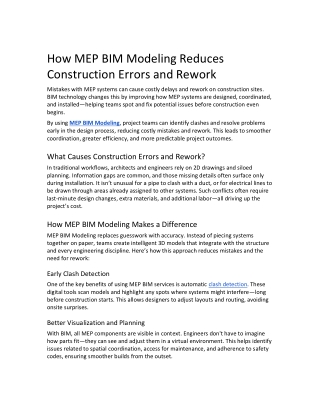
How MEP BIM Modeling Reduces Construction Errors and Rework Mistakes with MEP systems can cause costly delays and rework on construction sites. BIM technology changes this by improving how MEP systems are designed, coordinated, and installed—helping teams spot and fix potential issues before construction even begins. By using MEP BIM Modeling, project teams can identify clashes and resolve problems early in the design process, reducing costly mistakes and rework. This leads to smoother coordination, greater efficiency, and more predictable project outcomes. What Causes Construction Errors and Rework? In traditional workflows, architects and engineers rely on 2D drawings and siloed planning. Information gaps are common, and those missing details often surface only during installation. It isn’t unusual for a pipe to clash with a duct, or for electrical lines to be drawn through areas already assigned to other systems. Such conflicts often require last-minute design changes, extra materials, and additional labor—all driving up the project’s cost. How MEP BIM Modeling Makes a Difference MEP BIM Modeling replaces guesswork with accuracy. Instead of piecing systems together on paper, teams create intelligent 3D models that integrate with the structure and every engineering discipline. Here’s how this approach reduces mistakes and the need for rework: Early Clash Detection One of the key benefits of using MEP BIM services is automatic clash detection. These digital tools scan models and highlight any spots where systems might interfere—long before construction starts. This allows designers to adjust layouts and routing, avoiding onsite surprises. Better Visualization and Planning With BIM, all MEP components are visible in context. Engineers don't have to imagine how parts fit—they can see and adjust them in a virtual environment. This helps identify issues related to spatial coordination, access for maintenance, and adherence to safety codes, ensuring smoother builds from the outset.
Enhanced Team Collaboration BIM acts as a single source of truth. All disciplines—from structural to electrical—update one central model. If one team makes a change, everyone sees it. This transparency limits miscommunication, keeps teams in sync, and avoids costly revisions later. Precise Material Estimates Because everything is modeled in 3D with real dimensions and specifications, generating material lists is much more accurate. This minimizes waste, helps control budgets, and ensures the right items are delivered exactly when they’re needed. Smoother Prefabrication Opportunities MEP BIM Modeling encourages off-site prefabrication. Detailed 3D plans enable manufacturers to build assemblies in controlled environments and ship them to site, ready for installation. This reduces installation time, limits exposure to weather and unforeseen site conditions, and further cuts down on on-site errors and rework. Real-World Savings with MEP BIM Services Projects that use MEP BIM Modeling report fewer RFIs (Requests for Information) and change orders compared to traditional processes. Contractors can resolve most coordination issues during the design phase, not after construction has begun. This not only prevents delays but significantly reduces project costs and interruptions. For example, in multi-story residential or hospital projects, using BIM modeling allows teams to detect and resolve thousands of potential clashes between systems beforehand—saving months on schedules and millions in potential rework. Future-Proofing the Asset The benefits of a well-created MEP BIM model last long after handover. Accurate as- built models streamline facility management, speed up maintenance, and reduce operational headaches years down the road. Building owners can quickly locate system components, understand maintenance needs, and plan upgrades with confidence. Conclusion MEP BIM Modeling isn’t just a technological upgrade—it’s a smarter way to build. By minimizing errors during design and planning, reducing onsite surprises, and improving coordination, BIM helps construction teams deliver quality projects on time and within budget. Investing in MEP BIM services can mean the difference between a seamless project and one marred by costly corrections. In today’s competitive construction landscape, this advantage is simply too great to ignore.