Understanding Color: Light vs. Pigment and Their Impact on Our Perception
This guide explores the complex relationship between color, light, and pigment. It delves into the differences between additive and subtractive color models (RGB vs. CMYK) and how these principles apply to real-world phenomena, such as star colors and sunsets. Learn why the sky appears blue, clouds are white, and water takes on a cyan hue. Engage with student challenges on identifying star temperatures and the effects of color filters in astronomy. This comprehensive overview enhances our understanding of how color influences perception across various contexts.

Understanding Color: Light vs. Pigment and Their Impact on Our Perception
E N D
Presentation Transcript
Light vs. Pigment CMYK Pigment Additive Light Subtractive RGB ???
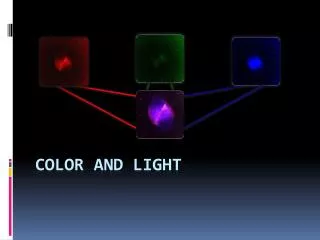
Light vs. Pigment Subtractive (CMYK) = Pigments Additive (RGB) = Light
Color and Temperature COOL Red Light Blue Light HOT Red Light Blue Light
Student Challenge • Which stars in the field are the hottest? • What do you notice about the bright star on the far right of the image? Is it hot or cool? How do you know? • If you were an astronomer and only wanted to take photographs of very hot starts, while filtering all the cool stars out of the image, what type of color filter would you use on your telescope?
Scattering/Absorption • Why Are Sunsets Red? Hint: Sunsets are more spectacular the smoggier the location… • Why Is The Sky Blue? • Why Are Clouds White? • Why Is Water Cyan?