Cell Growth and Reproduction
80 likes | 202 Vues
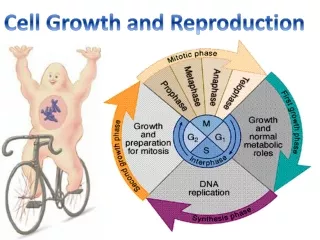
This chapter explores the life cycle of cells, encompassing interphase and mitotic phase. Interphase, often miscalled the "resting phase," is vital for cell growth and metabolism and is divided into three subphases: G1, S, and G2. The mitotic phase is crucial for body growth and tissue repair and consists of two key events: mitosis and cytokinesis. Each subphase plays a significant role in preparing the cell for division. The chapter provides insights into how cells grow, replicate DNA, and divide into daughter cells, critical processes for life.


Cell Growth and Reproduction
E N D
Presentation Transcript
Chapter 3 Pg. 98-104 Cell Growth and Reproduction
The Cell’s Life Cycle • There are a series of changes a cell goes through during its lifespan (much like us!!), it is divided into two main segments: Interphaseand cell division/mitotic phase
Two Stages of Cell Division • Interphase • It is referred to as the “resting phase” • However, this is a misnomer in the since it is only “resting” from actual division • It should be called a growth or metabolic phase • Divided into three subphases: G1, S, G2 • Mitotic Phase • Essential for body growth and tissue repair • Two distinct events: mitosis and cytokinesis
Interphase’s Subphases • Prepares the cell for the next division (mitosis) • In all three subphases the cell grows by producing proteins AND organelles (chromatin is ONLY reproduced during the S phase) • During the G1 the cell grows very rapidly-may last from several minutes to hours in cells that reproduce frequently or days to even years in those that reproduce very slow
Interphase’s Subphases • During the S phase DNA replicates, if something goes wrong in the phase, mitosis will NOT be able to occur • The G2 is the briefest out the three and this is where enzymes and other proteins are created and sent to their proper locations
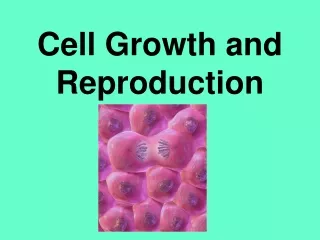
Cell Division • Creates two daughter cells from one mother cell • Has four phases: Prophase, Metaphase, Anaphase, Telophase • Is a continuous process that typically lasts about an hour or less • Division of cytoplasm • Begins during late anaphase and is completed after telophase • The cell membrane is drawn inward to form a cleavage furrow Mitosis Cytokinesis