Download

1 / 19
190 likes | 302 Vues
Explore the pioneering application of electroporation in water sterilization, achieving a 100% kill rate of bacteria with safe E.coli K12. Follow the process from biosafety to manufacturing for clean and efficient water production.

E N D
Dynamic Electroporation of Water Jacob Frye, Courtney Green, Christopher Robertson, and Scott Shields
Introduction • Water is the most important resource. • chemicals(chlorine, iodine) are widely used for sterilization. • Development of alternative sterilization using electricity.
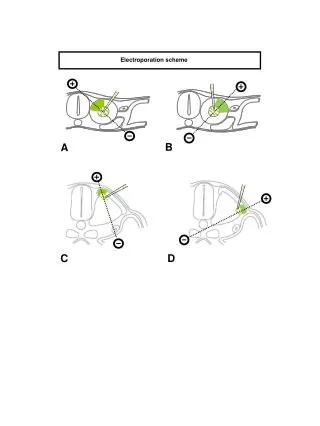
Background • Electroporation – forcefully opening pores of bacteria. • Electrical team performed static electroporation tests. • Results more inclined towards repetition and low voltage.
Background cont. • Use of E. coli k12 to minimize risk while properly modeling bacteria response to electroporation. • Group certification to handle high voltage sources.
Escherichia coli K12 • Safe and Harmless. • Similar Properties to Common or Lethal E. Coli • Optima Growth at 37 degrees Celsius • Kill rate exists at 42 degrees Celsius
Biosafety Qualifications • To work in the biological lab, Scott and Jacob had to pass the biosafety lab examination and read the Biosafety lab manual • Strict guidelines for the type of clothing and to properly test E. coli K12 around other dangerous bacteria.
Grow Process of E. coli K12 • Plate preparation • Growing process • Incubation period • Treatment and testing • Growing treated bacteria • Determine bacterial reduction
Specific Phases of E. coli K12 • Lag Phase • Log/Exponential Phase • Stationary Phase • Death Phase
Design Parameters • Use results from previous electrical team to develop mechanical flow system. • 100% kill rate of bacteria • 5 kV/cm³ to kill bacteria • Attain an 8 oz. cup of drinkable water in under 10 minutes
Figure 2: Secondary Design (Implementation Pending Time Constraints)
Manufacturing • Prefabricated Acrylic Rectangle Tubing • Lathe turned connectors • 16 gauge silver sheet • 8 gauge silver rod lathe turned ends • Interference press fit connection • Silicon adhesive for water containment
Figure 4: Fluid Chamber with silver plates connected to Peristaltic Pump
Preliminary Testing • Determine the possible flow rates with the Peristaltic Pump. • Tested the chamber at maximum flow rate. • Tested the chamber at our design flow rate. • Video and Still Images to follow.