
SlideServe
Menu
Préférences
© SlideServe · v2026

Radiation

oralee avatar
8 diapositives · 268 Views · Jul 23, 2014

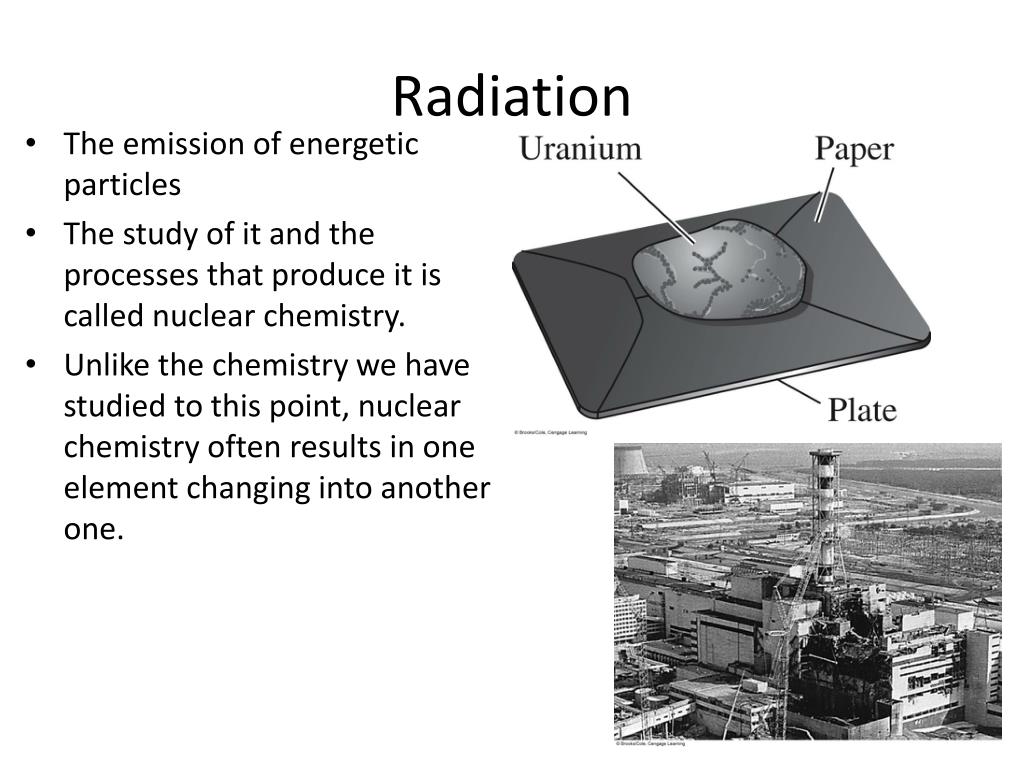
Radiation. The emission of energetic particles The study of it and the processes that produce it is called nuclear chemistry. Unlike the chemistry we have studied to this point, nuclear chemistry often results in one element changing into another one. Tragedy. April 26, 1986, 1:24 am
Radiation - slide 1
01 / 8Radiation
1 / 17

Télécharger la présentation

Radiation
Une image / un lien ci-dessous est fourni (tel quel) pour télécharger la présentation

Politique de téléchargement : le contenu du site vous est fourni TEL QUEL pour votre information et votre usage personnel ; il ne peut être vendu, concédé sous licence ni partagé sur d’autres sites sans l’accord de son auteur.Le contenu vous est fourni TEL QUEL, pour votre information et votre usage personnel uniquement. Téléchargez la présentation en cliquant sur ce lien. Lors du téléchargement, si vous ne parvenez pas à télécharger une présentation, l’éditeur a peut-être supprimé le fichier de son serveur.Pendant le téléchargement, si vous ne parvenez pas à obtenir une présentation, le fichier a peut-être été supprimé par l’éditeur.

F I N

Plus de contenu associé

Transcription de la présentation
  1. Radiation • The emission of energetic particles • The study of it and the processes that produce it is called nuclear chemistry. • Unlike the chemistry we have studied to this point, nuclear chemistry often results in one element changing into another one.

  2. Tragedy • April 26, 1986, 1:24 am • V.I. Lenin nuclear power plant • Chernobyl, USSR • Explosions in reactor 4 • 31 immediate deaths, 230 hospitalizations, countless exposures to high-level radiation • The aftermath continues to this day.

  3. Becquerel • Discovered that his paper-wrapped photographic plate was exposed by uranium-containing crystals. • This disproved his hypothesis linking exposure to UV light with phosphorescence. • But it revealed a brand-new phenomenon that he called the emission of uranic rays.

  4. Marie and Pierre Curie • Searched for the elements that produced the uranic rays • Discovered two new emitters of uranic rays; one was a new element (polonium) • Radioactivity not the result of a chemical reaction • Since the rays were not unique to uranium, a new term was proposed: “radioactivity” • Discovered radium as a result of its “extreme radioactivity”

  5. Radioactivity • The result of nuclear instability

  6. Alpha Radiation • Composed of two protons and two neutrons • Represented by the symbol for a helium nucleus • High ionizing power • Low penetrating power

  7. Beta Radiation • An energetic electron represented by the symbol β • Smaller than alpha particles, so more penetrating • But this also means less ionizing power • In beta decay, a neutron converts to a proton, emitting an electron and increasing the atomic number by 1.