Download
1 / 4
40 likes | 219 Vues
This guide explores the essential elements of character in fiction, including types of characters such as round, flat, static, and dynamic. It illuminates the roles of protagonists and antagonists, emphasizing how they drive the plot and contribute to themes and settings. Characterization methods are also outlined, showcasing how authors use direct description, dialogue, and reactions from others to develop characters. Whether you're a writer or a reader, understanding these concepts can enhance your appreciation of literary works.

E N D
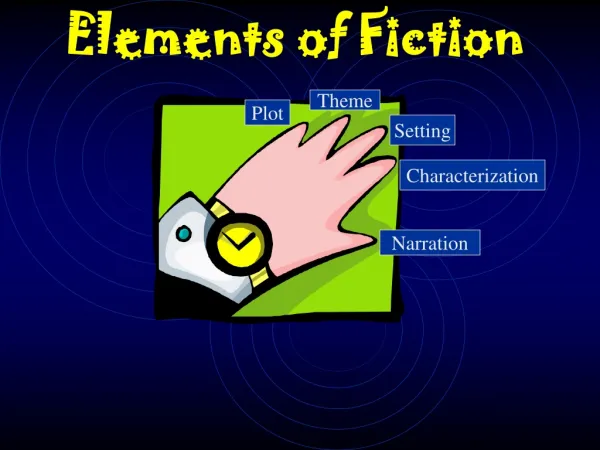
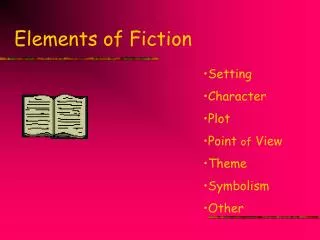
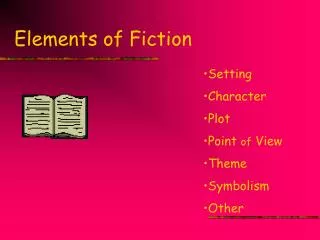
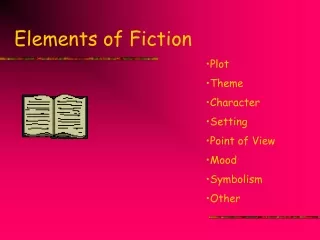
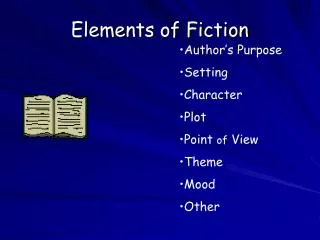
Elements of Fiction • Author’s Purpose • Setting • Character • Plot • Point of View • Theme • Mood • Other
Character The people (or animals, things, etc. presented as people) appearing in a literary work. • Types of Characters: • Round Character: convincing, true to life. • Dynamic Character: undergoes some type of change in story. • Flat Character: stereotyped, shallow, often symbolic. • Static Character: does not change in the course of the story.
CHARACTER TYPES: Most stories have both main and minor characters. The main character, or protagonist, is the most important character. The action of the plot revolves around him or her. Often the antagonist, the person or thing working against the protagonist, is also a main character.
Methods of Characterization • Direct Description/Physical Appearance or Personality: “He was an old man..” (TheOld Man and the Sea) • Character’s Own Words and Actions • Reaction of Other Characters • Character’s Own Thoughts