Download
1 / 6
60 likes | 199 Vues
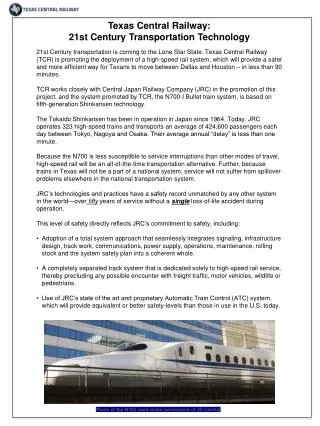
By Robert Q. Riley, this article explores the transportation challenges facing the 21st century, driven by a staggering 300% increase in global car population from 1995 to 2020. Greater demand coincides with dwindling resources and accelerated greenhouse gas emissions, leading to negative economic impacts. It also examines global petroleum reserves, the real cost of oil, and the environmental toll of conventional fuel. The piece discusses innovative vehicle concepts like hybrid and electric cars, alternative fuels, and necessary urban restructuring for sustainability.

E N D
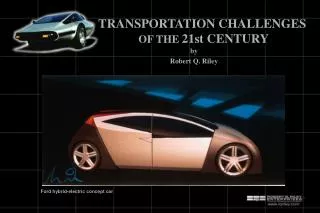
TRANSPORTATION CHALLENGES OF THE 21st CENTURY by Robert Q. Riley Ford hybrid-electric concept car
WORLD CAR POPULATION Developing World - 300% Increase Between 1995 & 2020 • Greater Demand & Less Resources • Accelerated Greenhouse Emissions • Environment & Energy Trends = Negative Economic Impacts
Total Recovered Total Remaining United States Canada Other Eastern Hemisphere Western Europe Eastern Europe, Former U.S.S.R., China Mexico, Central America, & South America Middle East WORLD PETROLEUM RESERVES Protecting Against Limited Supplies, Future Monopolies, and Price Increases Total Oil Recovered Since 1859 & Total Remaining as of 1990 Billion Barrels
1820 1860 1900 1940 1980 2020 GREENHOUSE EMISSIONS& GLOBAL WARMING Global Carbon Emissions 1820 to 2020 Source of U.S. CO2 Emissions 1997 Projection History
THE REAL COST OF PETROLEUM MOTOR FUEL Actual Cost of Oil is at Least $69 Per Barrel Environmental Damage Agricultural Losses Increased Health Care Expenses Higher Insurance Premiums $45/Barrel U.S. Military Expenses for Protecting Middle East Oil Supplies $9/Barrel $15/Barrel Price of a Barrel of Oil
DIFFERENT ROADS:AUTOMOBILES FOR THE NEXT CENTURY • Hybrid Power Systems • Battery Electric Cars • New Vehicle Types • Alternative Fuels • Restructured Cities • New Ways of Working XR-3 Tilting Three Wheel Vehicle