The Emancipation Proclamation: A Turning Point in American History
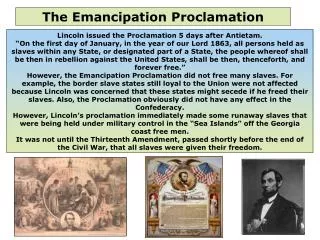
The Emancipation Proclamation, signed by President Abraham Lincoln on January 1, 1863, marked a pivotal moment in the fight against slavery in the United States. Announced on September 22, 1862, Lincoln had long contemplated the necessity of freeing enslaved people. While the immediate effect was limited, the proclamation signaled a moral stance that profoundly influenced public opinion and foreign relations, leading Britain and France to withhold recognition of the Confederacy. The abolition of slavery was ultimately cemented by the ratification of the 13th Amendment in 1865.

The Emancipation Proclamation: A Turning Point in American History
E N D
Presentation Transcript
Emancipation Proclamation Dates-Sign on January 1, 1863 Announced on 9/22/62 Summary-Lincoln pondered the thought of freeing the enslaved people for a long time. On 9-22-1862, Lincoln decided he would free them at last. Before it looked like a plea of desperation, Lincoln signed the document on 1-1-1863, thus, freeing all slaves in the United States of America. Effect: After the document was released, nothing really happened. Lincoln really wanted the slaves to her about it and then escape the slave masters. Britain and France also decided to withhold recognition of the confederacy because they did not agree with slavery. The 13th amendment was then pat and ratified in 1865, truly freeing the slaves. People: Lincoln, congress, Republicans, slaves.