The Emancipation Proclamation
The Emancipation Proclamation. Chapter 11, Section 3. Lincoln’s Problems- 1862. Britain and France had begun to negotiate with the Confederacy Lincoln was harshly criticized for not freeing the the slaves Lacked the Constitutional authority to free the slaves

The Emancipation Proclamation
E N D
Presentation Transcript
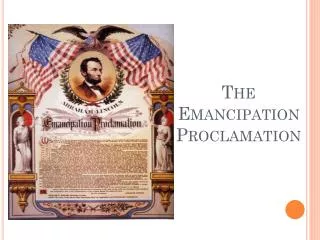
The Emancipation Proclamation Chapter 11, Section 3
Lincoln’s Problems- 1862 • Britain and France had begun to negotiate with the Confederacy • Lincoln was harshly criticized for not freeing the the slaves • Lacked the Constitutional authority to free the slaves • He feared prejudice would weaken public support for the war • He needed a Union victory so the announcement would not seem like an act of desperation
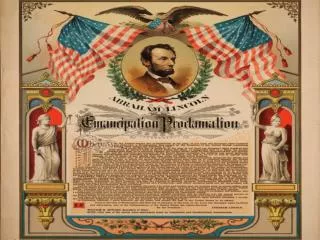
The Emancipation Proclamation (September 22, 1862) • It did not free any slaves in Union states, it only freed slaves in rebel states • Slaves were encouraged to runaway, destroying the Southern economy • Escaped slaves were allowed to join the Union army • Britain and France forced to side with the North • It took the objective of the war to “a higher plain
African Americans & the War • July 1862- African Americans were allowed to enlist in the army as laborers
African Americans & the War • Received less pay than white soldiers
African Americans & the War • By Spring 1863 black soldiers were fighting along side whites- the 54th Massachusetts infantry (“Glory”) • Became known for their bravery in battle
African Americans & the War • Were either killed immediately or returned to slavery if captured by Confederates