Discovering the Philippines: Climate, Geography, History, and Culture
The Philippines is a tropical archipelago comprising 7,107 islands, known for its humid climate and distinct wet season from June to October. This nation experiences the threat of typhoons and has a rich geological history, including volcanic and seismic activity. Historically, the Philippines was under Spanish rule for nearly 400 years, followed by a brief Japanese occupation during WWII, before gaining independence in July 1946. With its vibrant culture and predominantly Christian population, the Philippines offers unique attractions such as Boracay Beach and the stunning Chocolate Hills.

Discovering the Philippines: Climate, Geography, History, and Culture
E N D
Presentation Transcript
Philippines Alyssa Almario Period 2
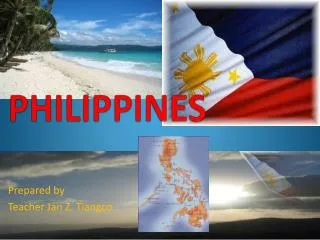
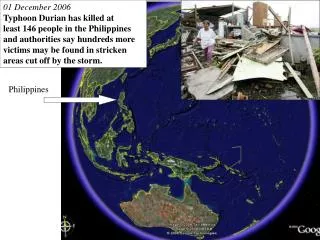
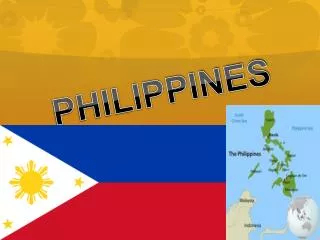
Background • Climate: • tropical and humid • rainy season extends from June to October • potential for volcanic and earthquake activity throughout the country. • Typhoons are likely from June to November but can occur anytime during the season because it is in the Typhoon Belt • Geography: • 7,107 islands • Many islands are mountainous • No particular borders just a country composed entirely of islands • Surrounds Pacific Ocean • More than one-fourth of the country's fertile soil is under cultivation. • About 25 percent of the land is covered with forests (down from 40 percent a decade ago).
History • Spain had control over the Philippines for nearly 400 years • Japan invaded the Philippines in 1941 until U.S forces returned near the end of WWII • July, 4 1946 the Philippines became an independent republic • Sites: Boracay Beach Chocolate Hills, Bohol Phillipines The Philippine Tarsier
Culture • Predominantly Christian nation • 81% belongs to Roman Catholic Church