
SlideServe
Menu
Préférences
© SlideServe · v2026

Karyotypes and Mutations

palti avatar
38 diapositives · 1.7K Views · Apr 29, 2012

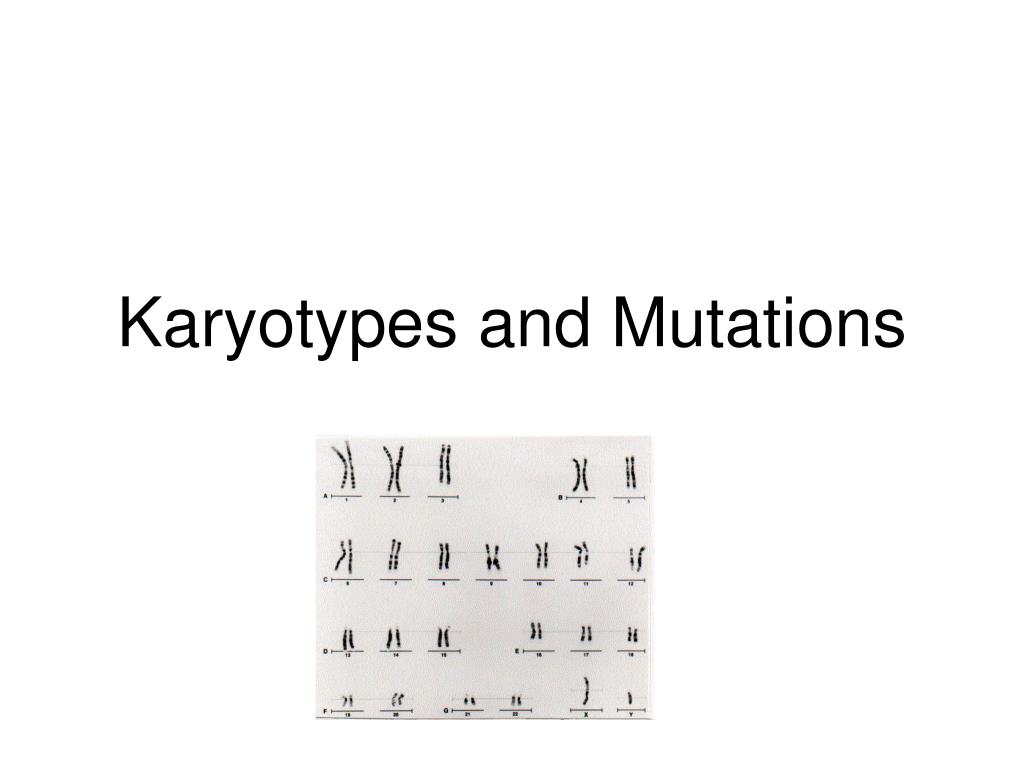
Karyotypes and Mutations. Karyotype. An orderly display of magnified images of the individual’s chromosomes Shows the chromosomes as
Karyotypes and Mutations - slide 1
01 / 38Karyotypes and Mutations
1 / 17

Télécharger la présentation

Karyotypes and Mutations
Une image / un lien ci-dessous est fourni (tel quel) pour télécharger la présentation

Politique de téléchargement : le contenu du site vous est fourni TEL QUEL pour votre information et votre usage personnel ; il ne peut être vendu, concédé sous licence ni partagé sur d’autres sites sans l’accord de son auteur.Le contenu vous est fourni TEL QUEL, pour votre information et votre usage personnel uniquement. Téléchargez la présentation en cliquant sur ce lien. Lors du téléchargement, si vous ne parvenez pas à télécharger une présentation, l’éditeur a peut-être supprimé le fichier de son serveur.Pendant le téléchargement, si vous ne parvenez pas à obtenir une présentation, le fichier a peut-être été supprimé par l’éditeur.

F I N

Plus de contenu associé

Transcription de la présentation
  1. Karyotypes and Mutations

  2. Karyotype • An orderly display of magnified images of the individual’s chromosomes • Shows the chromosomes as they appear in metaphase.

  3. What is a Normal Karyotype? • We are supposed to have 46 total chromosomes in each cell (22 pairs of autosomes = 44, + 2 sex chromosomes).

  4. One source:Amniocentesis • Take fluid from amniotic fluid around the baby • Can make a karyotype to see if there is a genetic disorder

  5. Preparing a Karyotype • 1. Use blood cells.

  6. Essay: Preparing a Karyotype • 2. Burst RBC (red blood cells) in hypotonic solution. • Release WBC (white blood cells).

  7. Essay: Preparing a Karyotype 3. Use a centrifuge to separate the white blood cells from the rest of the blood fluid

  8. Preparing a Karyotype • 4.Add chemical (colchicine) to stop the chromatids in metaphase (stops spindle fibers from forming)

  9. Preparing a Karyotype (cont) • 5. Drop on a slide.

  10. Preparing a Karyotype (cont) • 5. Take a picture • 6.Sort by size and shape from largest to smallest

  11. Other types of Karyotypes

  12. Types of Karyotypes • Fluorescent to detect a marker showing certain defect

  13. Types of Karyotypes • Colored dyes for certain chromosomes

  14. Types of Karyotypes • Ideogram: bands locate sites on chromosome

  15. Normal Karyotype • WHY? • Is it a Male or a female?

  16. Down Syndrome Karyotype • Trisomy 21

  17. Down Syndrome • Trisomy 21 • Folds over eyes • Sluggish muscles • Mental Problems

  18. Down Syndrome • The most common chromosome number abnormality • Round face • flattened nose bridge • small, irregular teeth

  19. Down Syndrome • Short Stature • heart defects • susceptibility to respiratory infection , leukemia and Alzheimer’s

  20. As the age of the mother increases above 30, the frequency of Trisomy 21 also increases Does the mother’s age matter?

  21. Nondisjunction • Uneven distribution of chromosomes in cell division

  22. 47 XXY syndrome male testes small (sterile) breast enlargement feminine body contours Klinefelter’s Abnormal Sex Chromosomes

  23. Klinefelter’s Syndrome • also XXYY, XXXY, XXXXY

  24. TURNER SYNDROME • XO (only one X) • short • often web of skin between neck and shoulders • sterile • poor breast development

  25. Turner Karyotype

  26. What about… • MUTATIONS?

  27. DELETION Fragment of the chromosome is lost

  28. Duplication Fragment of one chromosome attaches to a homologous chromosome

  29. Translocation Fragment reattaches in reverse direction (less likely to produce harm)

  30. INVERSION • The chromosome breaksin two places, a piece of the chromosome is removed and the chromosome pieces remaining rejoin.

  31. Inversions • Inversions, by definition, do not involve loss or gain of chromosomal material.

  32. INVERSION 46,XY,inv(16) • The left one is normal and the right one is inverted near the centromere.

  33. 45,XX,rob(13,14) A Robertsonian translocation (an end to end fusion of #13 and #14) There is no net gain or loss of genetic material in this person so they would have a normal phenotype.

  34. Chromosomes from the father of a retarded child... a portion of chromosome 11 (blue) has been transfered to chromosome 1(yellow). Applications

  35. Ideogram Show only one set of chromosomes