Cell Size Limitations
90 likes | 187 Vues
Discover why cells are typically between 2µm and 200µm in size, exploring the constraints of diffusion, DNA content, and surface area to volume ratio. Learn how cells divide to prevent becoming too large and the importance of cell division for growth, repair, and replacement.


Cell Size Limitations
E N D
Presentation Transcript
Cell Size Limitations Why are cells so small?
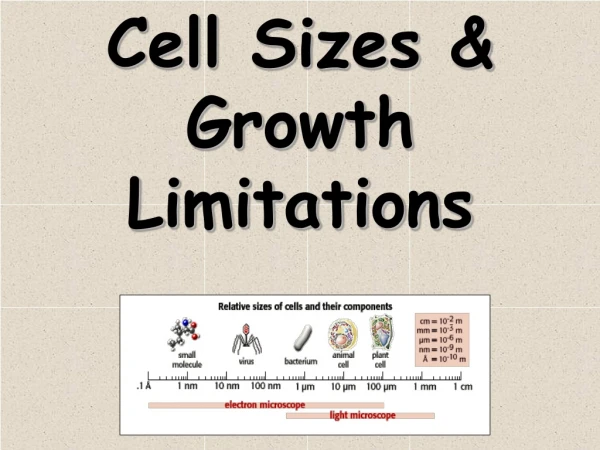
Most cells are between 2µm and 200µm • A micrometer is 1 millionth of a meter! • Too small to be seen with naked eye
Limits • Diffusion limits cell size • Movement from higher concentration to lower concentration • Larger the distance, slower the diffusion rate • A cell 20 cm would require months for nutrients to get to the center
DNA limits cell size • larger cells need more DNA. Needs more of everything • Most cells have just one nucleus
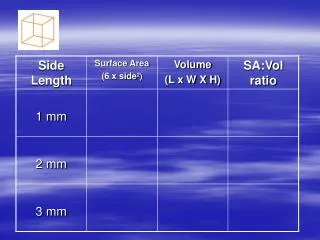
Volume increase more rapidly than surface area. • Cell size doubles, 8x as much volume, but only 4x as much surface area
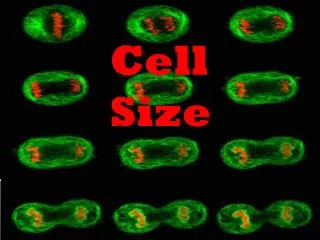
So, if too big is a problem, what’s the solution? Cells divide before they become too big • Process of cell division is called mitosis
Why do cells divide? • Replacement • Repair • Growth