Best Practices for Ditch and Watercourse Maintenance: Managing Invasive Plants
140 likes | 263 Vues
Effective maintenance of ditches and watercourses is crucial for preventing the spread of invasive plants, which can displace native species, reduce biodiversity, and cause ecological harm. This guide outlines best practices for managing invasive species during maintenance activities. Key topics include understanding the contractor's role, identifying priority invasive plants like Common Tansy and Brown Knapweed, and following guidance from environmental practices and the B.C. Weed Control Act. Engage with your local Regional Committee for assistance in invasive plant management.


Best Practices for Ditch and Watercourse Maintenance: Managing Invasive Plants
E N D
Presentation Transcript
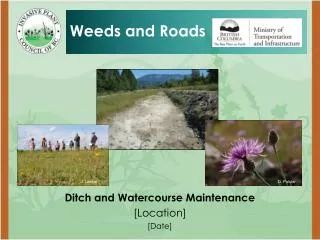
Weeds and Roads Ditch and Watercourse Maintenance [Location] [Date] J. Leekie D. Polster
Best Practices for Ditching • Invasive Plants and Impacts • The Contractor’s Role • Best Practices • Priority Plants Overview L. Scott Common Tansy
Definition • Invasive plants are non-native plants that • can cause significant damage. • They spread very quickly, • displacing and sometimes • eliminating native plants • They are sometimes • called ‘noxious weeds’ Invasive Plants CRD 3
Economic • Agriculture and Ranching • Forestry • Transportation Impacts BC MAL
Environmental • Reduced • biodiversity • Increased erosion • and sedimentation Impacts CRD Sulphur Cinquefoil B. Tokarska-Guzik, bugwood.org Oxeye Daisy
Guidance Documents • B.C. Weed Control Act • Environmental Best • Practices • MoT Best Practices Guide Your Role
What can you do • to manage • invasive plants • during ditch and • watercourse • maintenance? Your Role
VIDEO CLIP Your Role
What Should Happen Here? Best Practices L. Scott 10
What’s Gone Wrong Here? Best Practices L. Scott L. Scott 11
What Should Happen Here? Best Practices Brown Knapweed R. Mueller 12
Priority Plants within the District • [plant common and scientific name] • [plant common and scientific name] • [plant common and scientific name] Plants of Concern
Contact your local Regional Committee Call 1-888-WEEDSBC Visit www.invasiveplantcouncilbc.ca For More Information…
![Highway Shoulder Maintenance and Gravelling [Location] [Date]](https://cdn0.slideserve.com/672240/highway-shoulder-maintenance-and-gravelling-location-date-dt.jpg)