Understanding High-Shear, Low-CAPE Tornadoes: Insights from NC State Workshop
This workshop, led by Matthew D. Parker from North Carolina State University, delves into the dynamics of High-Shear, Low-CAPE (“HSLC”) tornadoes. It presents a comprehensive analysis of meteorological parameters, including ML CAPE and 0-6 km shear, correlating them with tornado incidences from 2004-2005. The session discusses the significance of high shear and low CAPE conditions in tornado formation, statistical assessments, and aims to enhance radar signature recognition. This research is vital for improving tornado forecasting and understanding severe weather patterns.

Understanding High-Shear, Low-CAPE Tornadoes: Insights from NC State Workshop
E N D
Presentation Transcript
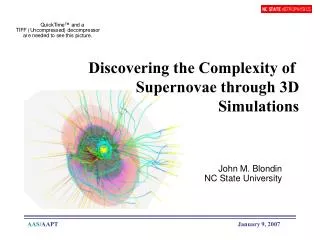
CSTAR workshop: High-shear, low-CAPE (“HSLC”) tornadoes/sig. severe introduction Matthew D. Parker North Carolina State Univ. Raleigh, NC 16 November 2012 NC STATE UNIVERSITY
Mean Tornado Environment: ML CAPE & 0-6 km Shear ML CAPE (J/kg, color fill), 0-6 km Shear (kt, blue barbs) (year=2004-2005, month=ALL) Max MLCAPE Over Plains Lower MLCAPE and Stronger Shear individual report influence - 160 km radius 2004-2005: 3277 tornado reports | 344 tornado days courtesy: Steve Weiss
ML CAPE≥ 2000 J kg -1| 0-6 km Shear ≥ 35 kt| ML CIN ≥- 100 J kg -1 Max 240 hr or 60 hr/yr Integrated 2003 - 2006 “environment hours”High CAPE; Strong Shear; Moderate CIN Integrated 2003 - 2006 “environment hours”High CAPE; High Shear; Moderate CIN courtesy: Steve Weiss
ML CAPE≤ 1000 J kg -1| 0-6 km Shear ≥ 35 kt| 0-1 km Shear ≥ 20 kt ML LCL ≤ 1000 m |ML CIN ≥ - 100 J kg -1 Max 480 hr or 120 hr/yr Integrated 2003 - 2006 “environment hours” Low CAPE; High Shear; Low LCL; Mod. CIN courtesy: Steve Weiss
High CAPE | Strong Shear Low CAPE | Strong Shear 48% of all F2+ tornadoes • 22% of F2+ tornadoes • widespread 80-120 hr/year • 26% of F2+ tornadoes • local axis 30-60 hr/year courtesy: Steve Weiss
Basic parameters: • Monthly conference calls for planning, O2R/R2O, etc. • By consensus, HSLC is considered to be: 0-6 km shear > 35 kts and SBCAPE < 500 J.kg • By consensus, landfalling TC cases are omitted • Initial “training dataset” of regional cases identified by NWS collaborators • Baseline for radar and parameter studies • Best events singled out for detailed NWS case studies • Additional data from SPC to supplement our work • Mesoanalysis data for detailed case studies (delivered online for use in Google Earth) • Relational database for all reports (not just the collaborator-identified cases)
Specific aims (end products): • Quantification of significant differences in ingredients for events vs. nulls; a new composite parameter idealized for HSLC (Sherburn lead) • Statistical assessment of radar signatures (convective mode, trackablemesovortices, other signatures like broken-S) associated with events vs. nulls (Davis lead) • Stats for groupings of interest: day vs. night, summer vs. winter, near vs. far from radar, S.E. U.S. vs. other regions, etc. (both projects) • A population of thorough case studies (events and nulls) whose environments and radar signatures will be compared to (and motivate) the longitudinal environmental and radar statistics (Moore, Lane, Coleman team leaders)