Mastering the GRE Verbal Section: Key Strategies for Success
Prepare effectively for the GRE Verbal Section with this comprehensive guide. In just 30 minutes, familiarize yourself with the section's structure, including 30 questions covering analogies, sentence completions, antonyms, and reading comprehension. Learn to identify the clear relationships in analogies, apply techniques for reading comprehension, and master strategies for tackling antonyms. With tips for answering each type of question and methods to eliminate incorrect choices, you’ll boost your confidence and improve your score on test day.

Mastering the GRE Verbal Section: Key Strategies for Success
E N D
Presentation Transcript
Preparing for the GRE Verbal Section 9/20/04
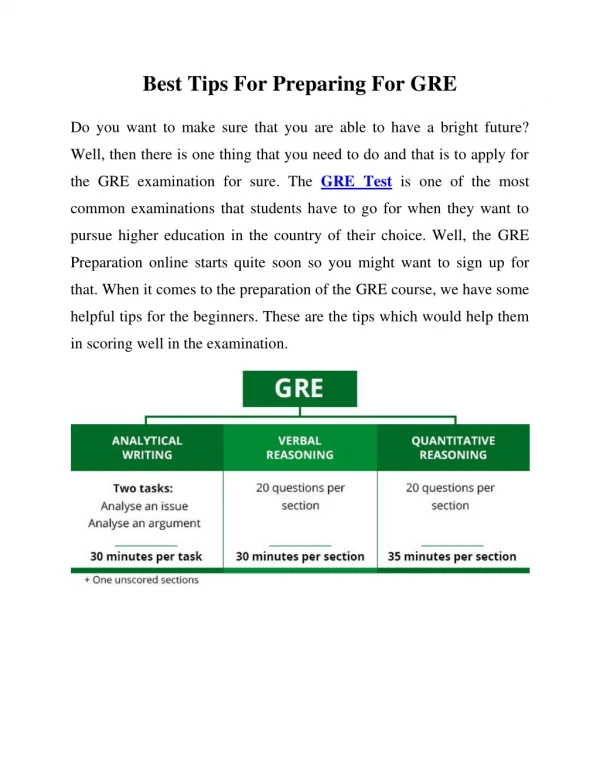
Geography of the Verbal Section • 30 minutes • 30 questions (in no particular order) • 6-8 analogies • 5-7 sentence completions • 8-10 antonyms • 2-4 reading comprehension passages (6-8 questions) • Typically starts with a few antonyms
Analogies • What is an analogy? • light : dark :: pleasure : pain • Looking for a clear and necessary relationship between the word pairs • Create a sentence to describe the relationship • Examples: • stone : sculptor • aviary : birds
Analogy Tips • Clear and necessary relationship • Form a simple sentence between the stem words • Plug in all of the choices • Eliminate answers with: • Triangular relationships • Words that don’t have C & N relationship • Work backward
Analogies – common relationships • Type of • elation : emotion • Used to • ultimatum : coerce • Degree • abhorrence : dislike • Characterized by • bigot : intolerance • Without / Lacking • courageous : fear
Analogy question • Tile : mosaic Form a basic sentence with the two words
Analogy question • tile : mosaic :: “A tile is a basic unit of a mosaic.” wood : totem stitch : sampler ink : scroll pedestal : column tapestry : rug
Reading Comprehension Tips • Read quickly; main ideas, topic sentence • Locate trigger words (although, but, however, yet) • Use general knowledge & common sense • Avoid answers that have: • Disputable choices • Direct quotes and repetitions
Antonyms – “opposites” • When you can define the stem word: • Make your own opposite • Use POE • Down to two? Make opposites and work backward • Read all choices to avoid careless errors
Antonyms • When you “sort of” know the word • Use positive/negative • Work backward on choices • Guess? Choose the most extreme choice remaining • Don’t know the stem word • Make opposites for all choices – eliminate those that don’t have an opposite • Avoid words that “sound like” the stem word • Guess? Choose the most extreme choice remaining
Antonyms – no clear opposites • Exhume • Breathe • Inter • Approve • Assess • Facilitate
Antonyms – when you “sort of” know the stem word • Positive/Negative connotation • Debilitate • discharge • strengthen • undermine • squelch • delete
Sentence completions (“fill in the blanks”) • Anticipate the word(s) in the blank(s) • Find the clue that restricts the meaning • Look for trigger words (although, but) • A fair AND ______ judge • A fair BUT ______ judge • Positive or negative? • Two blanks: solve one and eliminate