Transformations in English Politics and Society: The Era of Reform, 1832-1851
110 likes | 236 Vues
This period witnessed a flurry of reforms that reshaped English politics and society. Key developments included the 1832 Reform Bill, which initiated changes in parliamentary representation, the Factory Acts and the abolition of slavery in 1833, and the Municipal Corporations Act of 1835. The repeal of the Corn Laws in 1846, driven by figures like Richard Cobden and John Bright, responded to economic pressures, particularly the Irish potato famine. While Chartism rallied for universal suffrage, its broader aspirations faced challenges. This era's politics were influenced significantly by the monarchy and foreign policy under figures like Palmerston.


Transformations in English Politics and Society: The Era of Reform, 1832-1851
E N D
Presentation Transcript
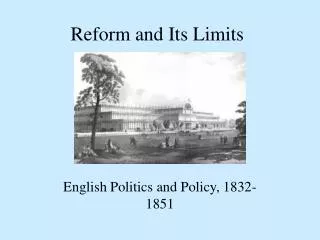
Reform and Its Limits English Politics and Policy, 1832-1851
A rage of Reforms • 1832 Reform Bill wasn’t final after all • 1833 Factory Act • 1833 slavery abolished in empire • 1835 Municipal Corporations Act • 1834 Poor Law • No consensus on reform—self help, utilitarianism • J. S. Mill’s idea of gradual amelioration of social conditions and emphasis on personal liberty eventually carried the day.
Repeal of Corn Laws • Challenge for Robert Peel and Tory Democracy • Richard Cobden and John Bright headed Anti-Corn Law League—advocated free trade • Irish potato famine made corn-law repeal more urgent • Peel got support from John Russell and Whigs and new that Wellington and Lords would go along for pragmatic reasons • Repeal in 1846, but Peel’s enemies forced him from office.
Chartism • Universal manhood suffrage, secret ballot, equal electoral districts, annual parliaments, no property qualifications for M. P., salaries for M. P. • Too many issues—but there were 3 million signatures on the 1842 petition. • Chartism as a movement failed, but by end of 19th century all but annual parliaments were enacted.
Queen Victoria, 1837-1901 • She reigned but did not rule • Bedchamber Crisis (1839) showed that a monarch could affect parliamentary politics • Married Albert of Saxe-Coburg-Gotha—marriage was a good one and Albert was learned in continental matters. • V. had many children and by end of century was “grandmother of all Europe.” • John Brown scandal
Foreign Policy—1820-1851 • Splendid Isolation but also active • Britain began to support failing Ottoman Empire to keep Russia out of the Mediterranean • 1839—Treaty of London—guaranteed Belgian neutrality. • 1830-1852; 1855-1865, Henry Temple, Viscount Palmerston, ran foreign affairs and then was PM. • Don Pacifico incident was quintessential Palmerston
Crystal Palace Exposition, 1851 • Iron and glass building in Hyde Park, 1851 feet long • 22 weeks to build • 15,000 exhibits from 41 countries • 500,000 attended opening day • Symbol of England’s apogee