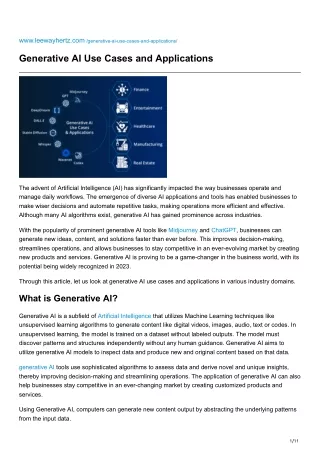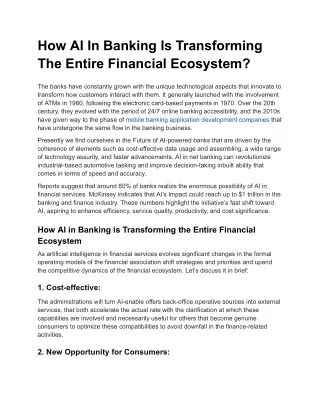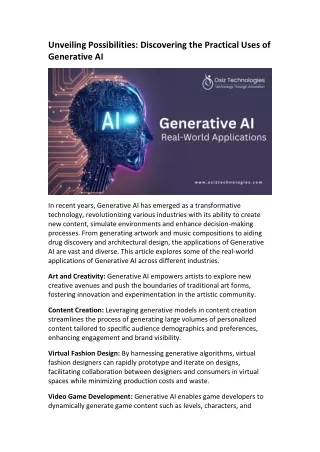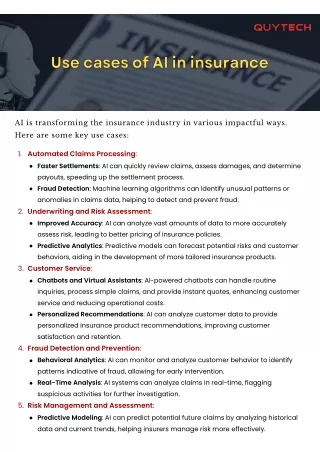
Beyond Image Recognition Discover Use Cases Where Data Labeling Powers AI
0 likes | 2 Vues
AI is not just about image recognition. <br><br>From product categorization in eCommerce to spam detection and medical imaging, data labeling powers intelligent systems across industries. <br><br>Accurate, structured, and compliant labeling directly impacts model performance, reliability, and scalability. <br><br>Discover practical use cases and best practices that help businesses unlock the true value of AI. <br><br>Read the full blog and explore how high-quality labeled data drives smarter decisions.


Beyond Image Recognition Discover Use Cases Where Data Labeling Powers AI
E N D
Presentation Transcript
Data Labeling Beyond Image Recognition: Key Use Cases
Introduction Data labeling is the process of tagging raw data to enable machine learning models to recognize patterns and make accurate predictions. It is foundational for supervised learning systems across various forms of data like text, images, and audio. This presentation explores its definition, differences from data annotation, and its critical role in powering AI applications today.
01 Understanding Data Labeling
Definition and Importance Data labeling involves assigning meaningful tags to raw data such as images, text, or audio, which helps AI systems learn and interpret information. It is essential for training supervised models to classify data accurately and improve predictive performance in AI projects across multiple industries.
Data Labeling vs Data Annotation While often used interchangeably, data labeling refers to applying simple tags or categories to data, whereas data annotation is broader—adding metadata, comments, or semantic enrichments. Labeling is a subset of annotation, focused mainly on categorization, critical for building clean and usable datasets. Read More
Best Practices for Quality Labeling To ensure high-quality data labeling, establish clear and detailed guidelines that minimize ambiguity. Implement regular feedback loops between annotators and reviewers to maintain consistency. Additionally, prioritize data privacy and compliance with industry regulations to protect sensitive information and build trust in AI solutions.
Use Cases of Data Labeling
Product Categorization in E-commerce Labeled product data enables online marketplaces to automatically categorize items, improving search accuracy and recommendation systems. This leads to enhanced user experience, making it easier for customers to discover products, ultimately driving higher conversions and increased sales.
Spam Detection in Emails Email providers train AI models with labeled datasets distinguishing spam from legitimate emails. Accurate labeling allows systems to identify suspicious patterns, reduce phishing risks, and protect users from malicious communications, ensuring secure and efficient email services.
Medical Imaging Classification In healthcare, labeled medical images such as X-rays and MRIs support AI in detecting abnormalities and classifying diseases. High-quality labeling enhances diagnostic accuracy, aiding clinical decisions and improving patient outcomes through timely and precise detection.
Conclusions Data labeling is a critical step beyond basic image recognition, powering diverse AI applications from e-commerce to healthcare. By adopting structured guidelines, ensuring ongoing quality control, and safeguarding privacy, organizations can unlock AI’s full potential, driving innovation and delivering impactful solutions across industries.
Thanks! Do you have any questions? www.damcogroup.com info@damcogroup.com +1 609 632 0350