Download
1 / 9
100 likes | 253 Vues
This guide explores the fundamentals of static electricity, focusing on the behavior of electric charges. It explains the principle that like charges repel and opposite charges attract. The process of charging through rubbing is detailed, highlighting how friction allows electrons to move from cloth to polythene, resulting in a negatively charged polythene and a positively charged cloth. Additionally, the charging effect of acetate is noted, indicating it becomes positively charged. Understanding these concepts is crucial for grasping the basics of electrostatics.

E N D
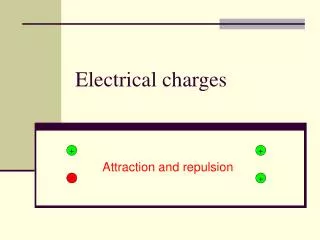
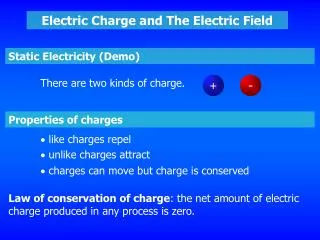
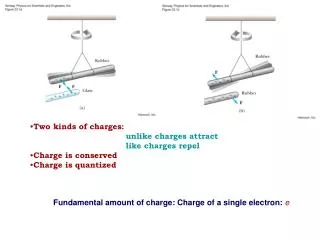
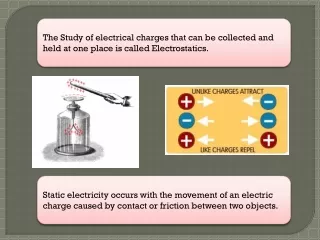
Two types of charge + - + - - + Same charges repel, different charges attract
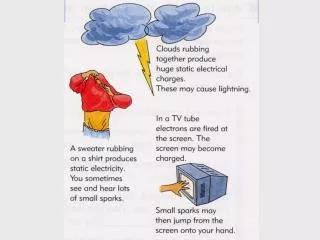
How rubbing can produce static electricity At the start each material has no overall charge. Friction rubs electrons off the cloth onto the surface atoms of polythene. The polythene gains electrons and becomes negatively charged. The cloth loses electrons and becomes equally positively charged. However, acetate becomes positively charged
However, acetate becomes positively charged