Download
1 / 7
70 likes | 196 Vues
This educational overview explores the fundamental aspects of technology and engineering, including their definitions, processes, and applications. Key areas discussed are bioengineering and its subfields—adaptive and assistive bioengineering. Examples illustrate the impact of these fields, from everyday tools like pencils and computers to advancements in healthcare through vaccines and genetic modifications. A 3-2-1 exit ticket activity engages learners by summarizing their insights about technology and distinguishing between assistive and adaptive bioengineering.

E N D
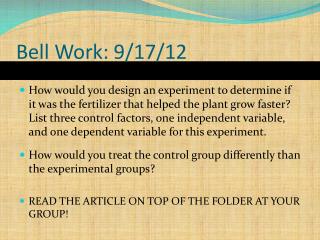
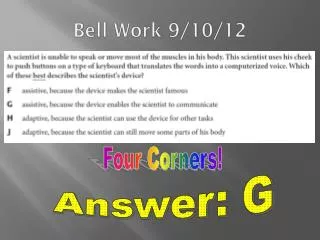
Bell Work 9/10/12 Four Corners! Answer: G
Technology YOURS: textbook: • Technology refers to the products and processesthat are designed to serve our needs; tools and methods for creating these products and processes. • Examples: computer, pencil, toilet
Engineering YOURS: textbook: • The process of creating technology. • Examples: designing and building a robot; designing and creating a cell phone
Bioengineering YOURS: textbook: • Applying engineering to living things, such as humans and plants • Examples: eye glasses, drought-resistant plants, and vaccines
Adaptive Bioengineering YOURS: textbook: • Engineering that results in a product or process that changes living organisms • Examples: Altering DNA and artificial (fake) skin
Assistive Bioengineering YOURS: textbook: • Engineering that results in a product or process that helps living organisms but does not change them permanently • Examples: contact lenses and crutches
3-2-1 Exit Ticket • 3 Things I Learned about Technology and Engineering • 2 Examples of Technology • 1 difference between Assistive and Adaptive Bioengineering